Main menu

  • Home
  • Current Issue
  • Archive
  • Info for
    • Authors
    • Editorial Policies
    • Advertisers
    • Editorial Board
    • Special Issues
  • Journal Metrics
  • Other Publications
    • Anticancer Research
    • Cancer Genomics & Proteomics
    • Cancer Diagnosis & Prognosis
  • More
    • IIAR
    • Conferences
  • About Us
    • General Policy
    • Contact
  • Other Publications
    • In Vivo
    • Anticancer Research
    • Cancer Genomics & Proteomics

User menu

  • Register
  • Subscribe
  • My alerts
  • Log in
  • My Cart

Search

  • Advanced search
In Vivo
  • Other Publications
    • In Vivo
    • Anticancer Research
    • Cancer Genomics & Proteomics
  • Register
  • Subscribe
  • My alerts
  • Log in
  • My Cart
In Vivo

Advanced Search

  • Home
  • Current Issue
  • Archive
  • Info for
    • Authors
    • Editorial Policies
    • Advertisers
    • Editorial Board
    • Special Issues
  • Journal Metrics
  • Other Publications
    • Anticancer Research
    • Cancer Genomics & Proteomics
    • Cancer Diagnosis & Prognosis
  • More
    • IIAR
    • Conferences
  • About Us
    • General Policy
    • Contact
  • Visit iiar on Facebook
  • Follow us on Linkedin
Research ArticleClinical Studies

Associations Between Time to Treatment Start and Survival in Patients With Lung Cancer

TRINE STOKSTAD, SVEINUNG SØRHAUG, TORE AMUNDSEN and BJØRN H. GRØNBERG
In Vivo May 2021, 35 (3) 1595-1603; DOI: https://doi.org/10.21873/invivo.12416
TRINE STOKSTAD
1Department of Clinical and Molecular Medicine, Faculty of Medicine and Health Sciences, NTNU, Norwegian University of Science and Technology, Trondheim, Norway;
2Department of Gynecology, St. Olav’s Hospital, Trondheim University Hospital, Trondheim, Norway;
  • Find this author on Google Scholar
  • Find this author on PubMed
  • Search for this author on this site
SVEINUNG SØRHAUG
3Department of Circulation and Medical Imaging, Faculty of Medicine and Health Sciences, NTNU, Norwegian University of Science and Technology, Trondheim, Norway;
4Department of Thoracic Medicine, St. Olav’s Hospital, Trondheim University Hospital, Trondheim, Norway;
  • Find this author on Google Scholar
  • Find this author on PubMed
  • Search for this author on this site
TORE AMUNDSEN
3Department of Circulation and Medical Imaging, Faculty of Medicine and Health Sciences, NTNU, Norwegian University of Science and Technology, Trondheim, Norway;
4Department of Thoracic Medicine, St. Olav’s Hospital, Trondheim University Hospital, Trondheim, Norway;
  • Find this author on Google Scholar
  • Find this author on PubMed
  • Search for this author on this site
BJØRN H. GRØNBERG
1Department of Clinical and Molecular Medicine, Faculty of Medicine and Health Sciences, NTNU, Norwegian University of Science and Technology, Trondheim, Norway;
5Department of Oncology, St. Olav’s Hospital, Trondheim University Hospital, Trondheim, Norway
  • Find this author on Google Scholar
  • Find this author on PubMed
  • Search for this author on this site
  • For correspondence: bjorn.h.gronberg{at}ntnu.no
  • Article
  • Figures & Data
  • Info & Metrics
  • PDF
Loading

Abstract

Background: Time-to-treatment is defined as a quality indicator for cancer care but is not well documented. We investigated whether meeting Norwegian timeframes of 35/42 days from referral until start of chemotherapy or surgery/radiotherapy for lung cancer was associated with survival. Patients and Methods: The medical records of 439 lung cancer patients at a regional cancer center were reviewed and categorized according to treatment: (i) surgery; ii) radical radiotherapy; iii) stereotactic radiotherapy; iv) palliative treatment, no cancer symptoms; v) palliative treatment with severe cancer symptoms). Results: Proportions receiving timely treatment varied significantly at 39%, 48%, 10%, 44% and 89%, respectively (p<0.001). Overall, those starting treatment on time had the shortest median overall survival (10.6 vs. 22.6 months; p<0.001). This was also the case for palliative (5.3 vs. 11.4 months) (p<0.001) but not for curative treatment (not reached vs. 38.3 months) (p=0.038). Conclusion: Timely treatment is not necessarily associated with improved survival.

  • Quality of healthcare
  • quality indicator
  • delayed treatment
  • treatment outcomes
  • cancer care

The incidence of cancer is growing, and it is now a leading cause of death worldwide (1-5). The burden of malignant diseases is a public and political concern and has led to increasing attention being paid to the quality and organization of cancer care. One common perception is that a long interval until treatment starts worsens the prognosis due to tumor growth while waiting (6), and many guidelines for cancer care organization include recommendations for timeframes until treatment start.

Lung cancer is among the most common malignant diseases, the prognosis is poor, and it is the most common cause of cancer-related death (3, 7-9). Due to the rapid disease evolvement in many patients with lung cancer, we deem it to be one of the most relevant types of cancer to study when investigating whether time until treatment start affects survival.

Despite this being the subject of many studies, the importance of diagnostic delay is uncertain. Some studies show associations between increased mortality and long waiting time for diagnostic procedures to be completed (10, 11), or treatment to start (12-15), but only when timeframes are as long as 3 to 4 months (16, 17). Paradoxically, other studies have shown that long intervals are associated with improved survival (18-23), probably due to differences in number and types of investigations included in diagnostic workup for different stages of disease (24-26). Others found no such associations (27-29), and thus the evidence of time for diagnostic workup being a prognostic factor in lung cancer is limited.

The recommended time to starting lung cancer treatment ranges from 35 days to 3 months in different countries (30-32). In Norway, recommended timeframes from receiving a referral letter for suspected lung cancer until the start of treatment are 35 calendar days for systemic cancer therapy and 42 days for surgery and radiotherapy. We found that the proportions at our hospital of patients who started lung cancer treatment within recommended timeframes were 35% for curative and 65% for palliative treatment (33). In the present study, the aim was to investigate whether patients who started treatment within these timeframes had longer survival than those who started treatment later.

Patients and Methods

Study setting. St. Olav’s Hospital, Trondheim University Hospital, in Trondheim, Norway, is the regional cancer center for the Central Norway Health Region which has 700,000 inhabitants, and it is the primary hospital for 317,000 people. All facilities for diagnosis and treatment of lung cancer are available, including a Tumor Board, of pulmonologists, thoracic surgeons, oncologists, thoracic radiologists, specialists in nuclear medicine, pathologists and a patient coordinator, which meets twice every week.

Study design, patients and definitions. We performed a retrospective review of the individual electronic medical records of all patients who were diagnosed with lung cancer at the Department of Thoracic Medicine at St. Olav’s hospital between January 1, 2011 until December 31, 2013. Further details of the conduct of the study were presented in a previous article (33). Stage of disease was assessed according to the seventh edition of the TNM classification of lung cancer (34).

Start of the diagnostic workup was defined as a) the date when a referral letter for suspected lung cancer was received at the Department of Thoracic Medicine, or b) the date when diagnostic workup for suspected lung cancer was initiated for a patient with a single pulmonary nodule who had been previously observed (‘watchful waiting’). Survival was defined as the time from the start of diagnostic workup until death from any cause. ’Time to treatment’ was defined as the interval from the start of diagnostic work-up until the day of surgery or the first day of radiotherapy or systemic therapy.

We defined ’timely’ as a time to treatment of ≤42 days for surgery or radiotherapy or ≤35 days for systemic therapy. If intervals were longer, time to treatment was categorized as ’untimely’. For the subgroup analyses, we defined five treatment groups: i) Surgery: Patients who underwent surgery for stage I-III disease; ii) Other standard curative: Radical radiotherapy for stage III non-small-cell lung cancer (NSCLC), or radio-chemotherapy for stage I-III (limited stage) SCLC; iii) Secondary curative: Stereotactic radiotherapy or radical radiotherapy for stage I-II NSCLC for patients who were ineligible for surgery; iv) Palliative, no severe symptoms: Palliative treatment for patients with no severe cancer symptoms; v) Palliative, severe symptoms: Palliative treatment for patients who presented with neurological symptoms, symptoms due to infiltration of mediastinal structures (e.g. airway obstruction, hoarseness, dysphagia, superior vena cava syndrome), bone pain, other pain due metastases, or weight-loss ≥5% in the 3 months prior to diagnosis.

We used the forced expiratory volume in 1 second (percentage of expected value, FEV1%) as a measure of pulmonary function, and the Charlson comorbidity index score without age-adjustment as a measure of comorbidity.

Analyses were performed using the Stata/IC 14.2 package for Windows (StataCorp LLC, College Station, TX, USA). We used chi-square statistics for bivariate analyses and log-rank test for survival analyses. A two-sided p-value of less than 0.05 was defined as the level of statistical significance.

Ethics. The study, including the use of a passive consent procedure, was approved by the Regional Committee for Medical and Health Research Ethics in Western Norway (REK Vest (2014/60). Patients still alive received written information about the study and were given the opportunity to decline participation by completing a form and return it in an enclosed, prepaid envelope.

Results

Patient characteristics. A total of 453 patients were diagnosed with lung cancer at the Department of Thoracic Medicine between January 1, 2011 and December 31, 2013, of whom five declined participation. Another nine patients were excluded from the analyses due to uncommon thoracic malignancies: Carcinoid (n=6), clear-cell carcinoma (n=2), and epithelial/myoepithelial carcinoma (n=1).

Of the 439 patients analyzed, 203 (46%) were women; 155 (35%) >75 years; 311 (71%) had NSCLC and 63 (14%) had no histologically or cytologically confirmed diagnosis. One hundred and forty-seven (33%) had stage I-II disease; 113 (26%) stage III; and 179 (41%) stage IV (Table I).

View this table:
  • View inline
  • View popup
  • Download powerpoint
Table I.

Patient characteristics.

Eleven patients with preliminary stage I-IIIA on the initial computed tomography (CT) scan and fit for curative treatment were upstaged and received palliative treatment due to metastasis revealed on positron-emission tomography CT (n=9), brain magnetic resonance imaging (n=1), or bone scan (n=1). Fourteen patients were upstaged from clinical stage I to pathological stage II (n=9) or III (n=5) after surgery, and six patients with clinical stage II had pathological stage III disease. We were not able to assess performance status due to missing data in a large proportion of the medical records.

One hundred and nine patients (25%) underwent surgery; 42 (10%) other standard curative treatment; and 31 (7%) secondary curative treatment. Among those who received palliative treatment, 88 (20%) had severe symptoms, and 85 (19%) did not. Eighty-four patients (19%) did not receive any cancer therapy. Among these, seven patients died before treatment started, one due to complications of a diagnostic procedure.

There were no statistically significant differences in sex distribution, or the proportion aged >75 years between the treatment groups. There were significantly more patients with an FEV1% <80% of the expected value (p=0.004), a Charlson comorbidity index score of >2 (p=0.033), and no histologically or cytologically confirmed diagnosis (p≥0.001) among the patients in the secondary curative treatment group than among those who underwent surgery or other standard curative treatment. In addition, there was a trend towards more patients with stage I disease in the secondary curative treatment group than in the surgery group (p=0.052). In the palliative treatment group without severe symptoms, the proportion with stage I-III disease was significantly higher than among those in the group of palliative treatment with severe symptoms (p=0.007) (Figure 1).
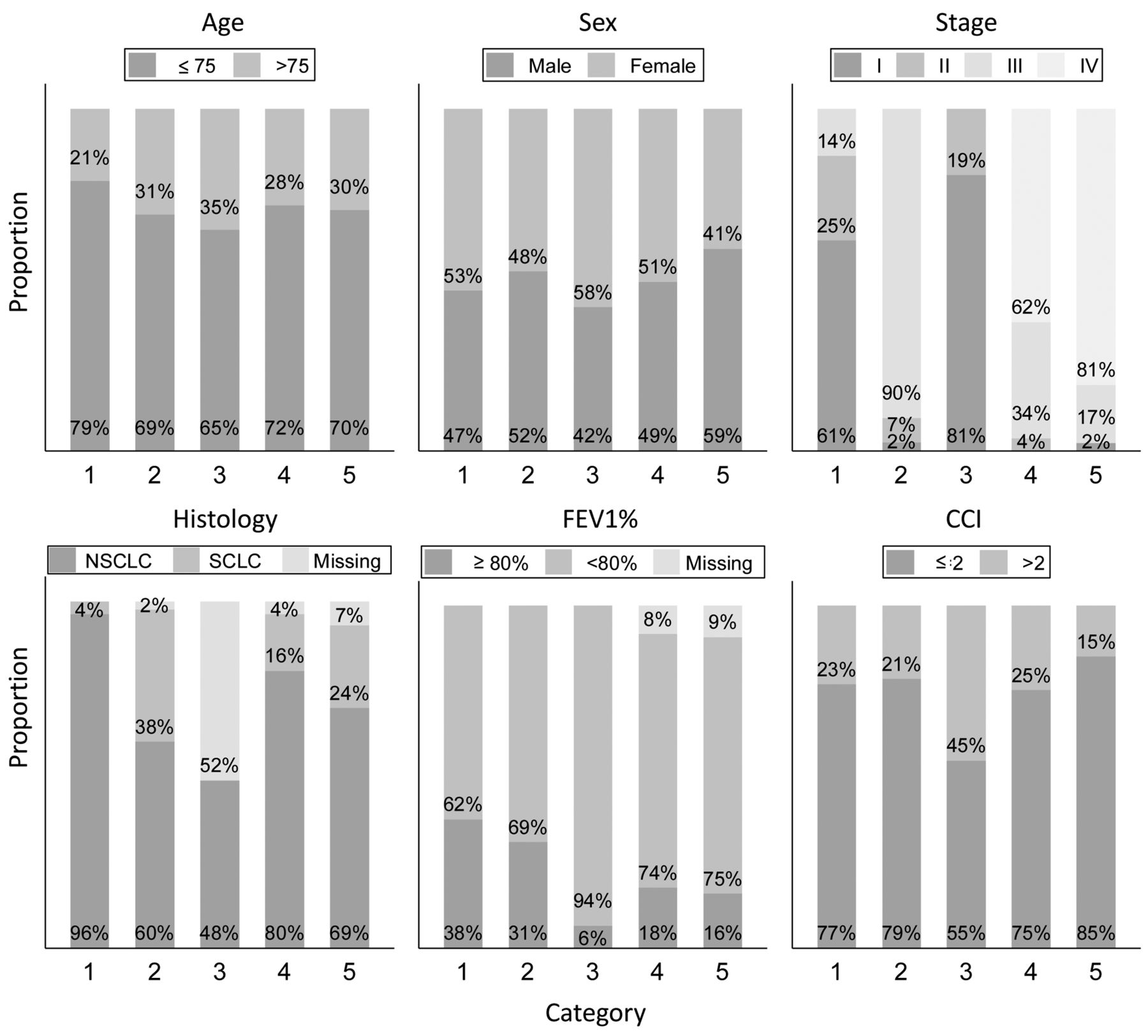
Figure 1.
  • Download figure
  • Open in new tab
  • Download powerpoint
Figure 1.

Distribution of patients according to important characteristics by treatment category: 1) Surgery for stage I-III disease; 2) radical radiotherapy for stage III non-small-cell lung cancer, or chemo-radiotherapy for stage I-III small-cell lung cancer; 3) stereotactic radiotherapy or radical radiotherapy for stage I-II non-small-cell lung cancer; 4) palliative treatment, no severe cancer symptoms; 5) palliative treatment for patients presenting with severe cancer symptoms. CCI: Charlson comorbidity index score; FEV1%: forced expiratory volume in 1 second (percentage of expected value).

Timeliness. Overall, 180 (51%) received timely treatment, and the proportion varied significantly (p<0.001) between the groups: 39% among those who underwent surgery [with a median number of days until treatment : 49 (range=5-296) days]; 48% in the other standard curative treatment group [median=42 (range=2-90) days]; 10% in the secondary curative treatment group [median=63 (range=29-168) days]; 44% in the palliative, no severe symptoms group [median 42 (range=6-201) days]; and 89% in the palliative with severe symptoms group [median=23 (range: 3-90) days] (Figure 2).
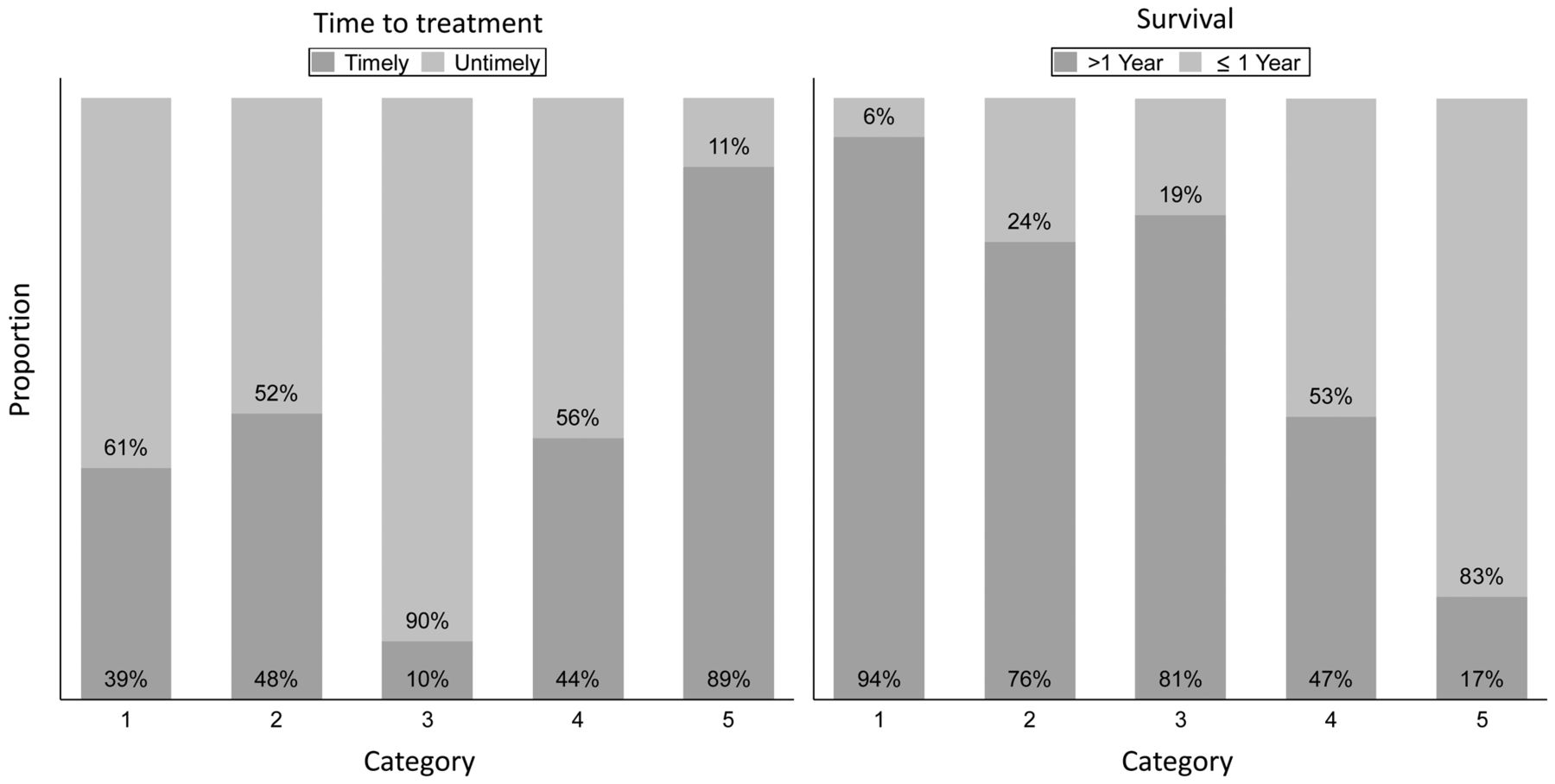
Figure 2.
  • Download figure
  • Open in new tab
  • Download powerpoint
Figure 2.

Timeliness of lung cancer treatment and survival by treatment category: 1) Surgery for stage I-III disease; 2) radical radiotherapy for stage III non-small-cell lung cancer, or radio-chemotherapy for stage I-III small-cell lung cancer; 3) stereotactic radiotherapy or radical radiotherapy for stage I-II non-small-cell lung cancer for patients ineligible for surgery; 4) palliative treatment, no severe cancer symptoms; 5) palliative treatment for patients with severe cancer symptoms.

In the other standard curative treatment group, the proportion of patients aged >75 years was significantly higher in those who received untimely treatment (45% vs. 15%; p=0.033). In the group with palliative treatment with severe symptoms, there was a higher proportion of stage I-III disease in those who received untimely treatment (50% vs. 15%; p=0.009). Otherwise, baseline characteristics were well balanced between those who received timely treatment and those who did not within each treatment group (data not shown).

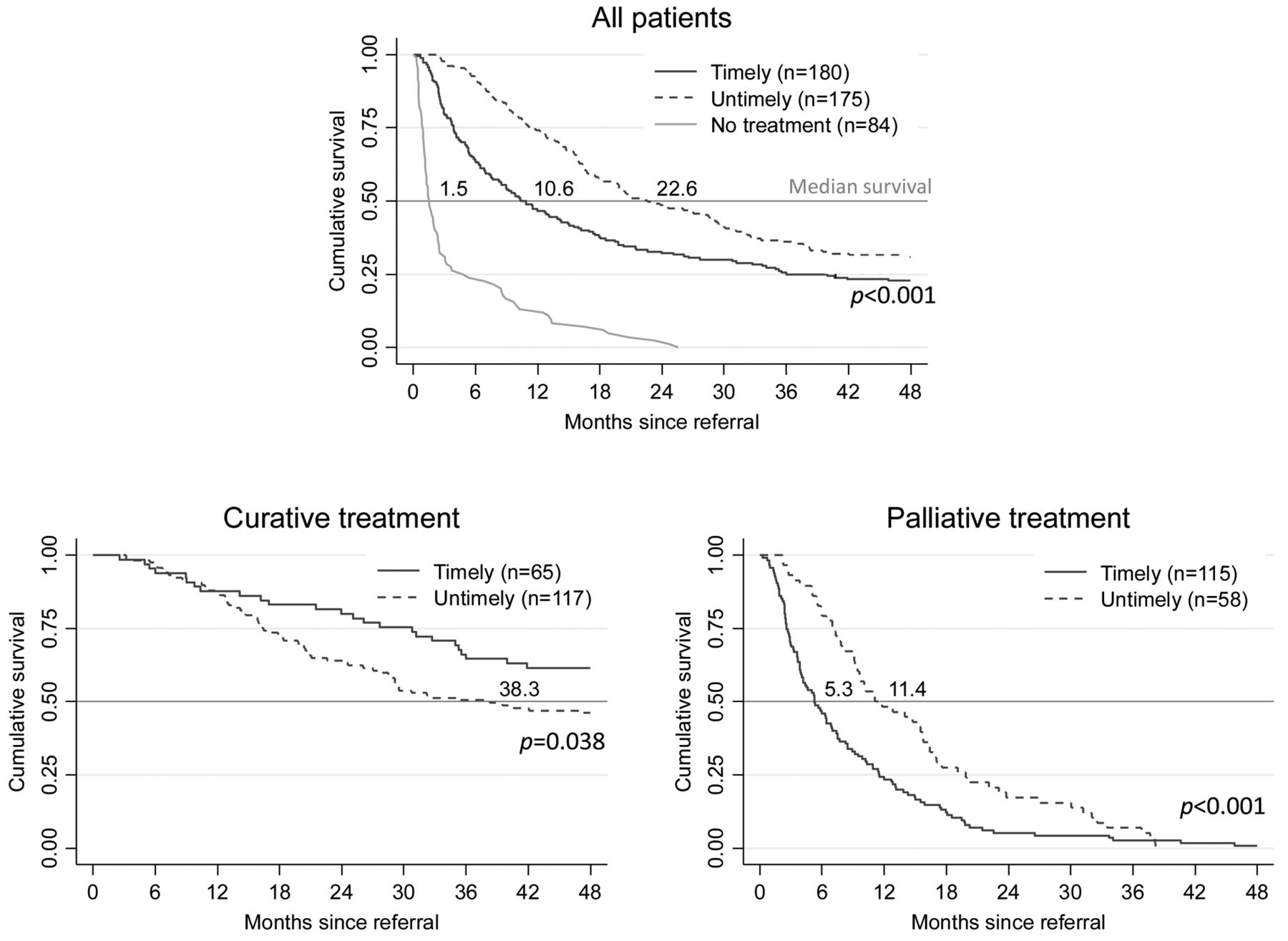
Survival. Considering the total population, the median overall survival was 10.6 months among those who received timely treatment, and 22.6 months among those who received untimely treatment (p<0.001). Those who did not receive any cancer treatment had a median overall survival of 1.5 months. Among curative patients, those who received timely treatment had a better median survival (timely=not reached, untimely=38.3 months; p<0.038), whereas the opposite was the case among those who received palliative therapy (timely=5.3 months, untimely=11.4 months; p<0.001) (Figure 3).
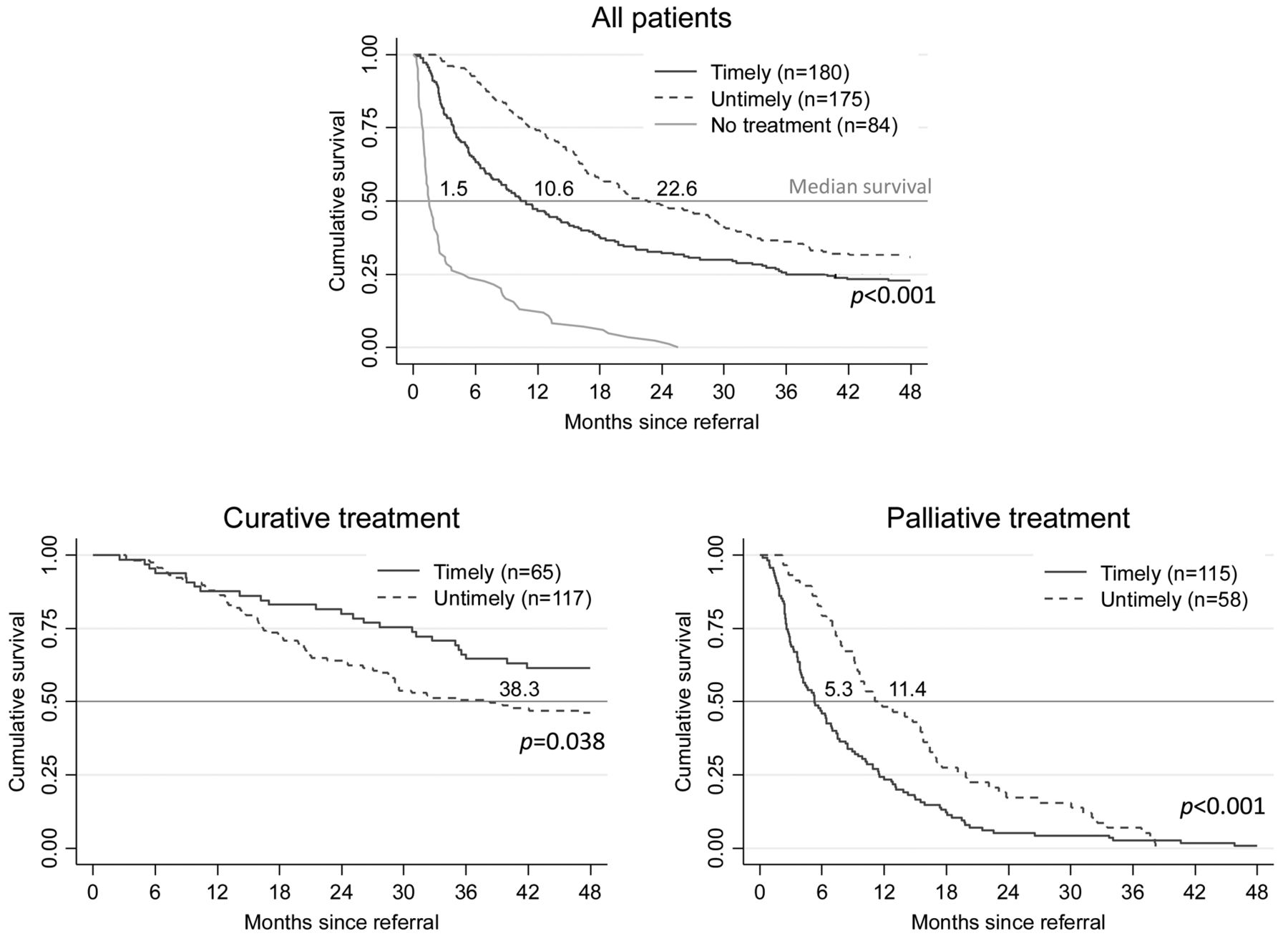
Figure 3.
  • Download figure
  • Open in new tab
  • Download powerpoint
Figure 3.

Overall survival according to timeliness of treatment for all patients, for those receiving curative, and those receiving palliative treatment.

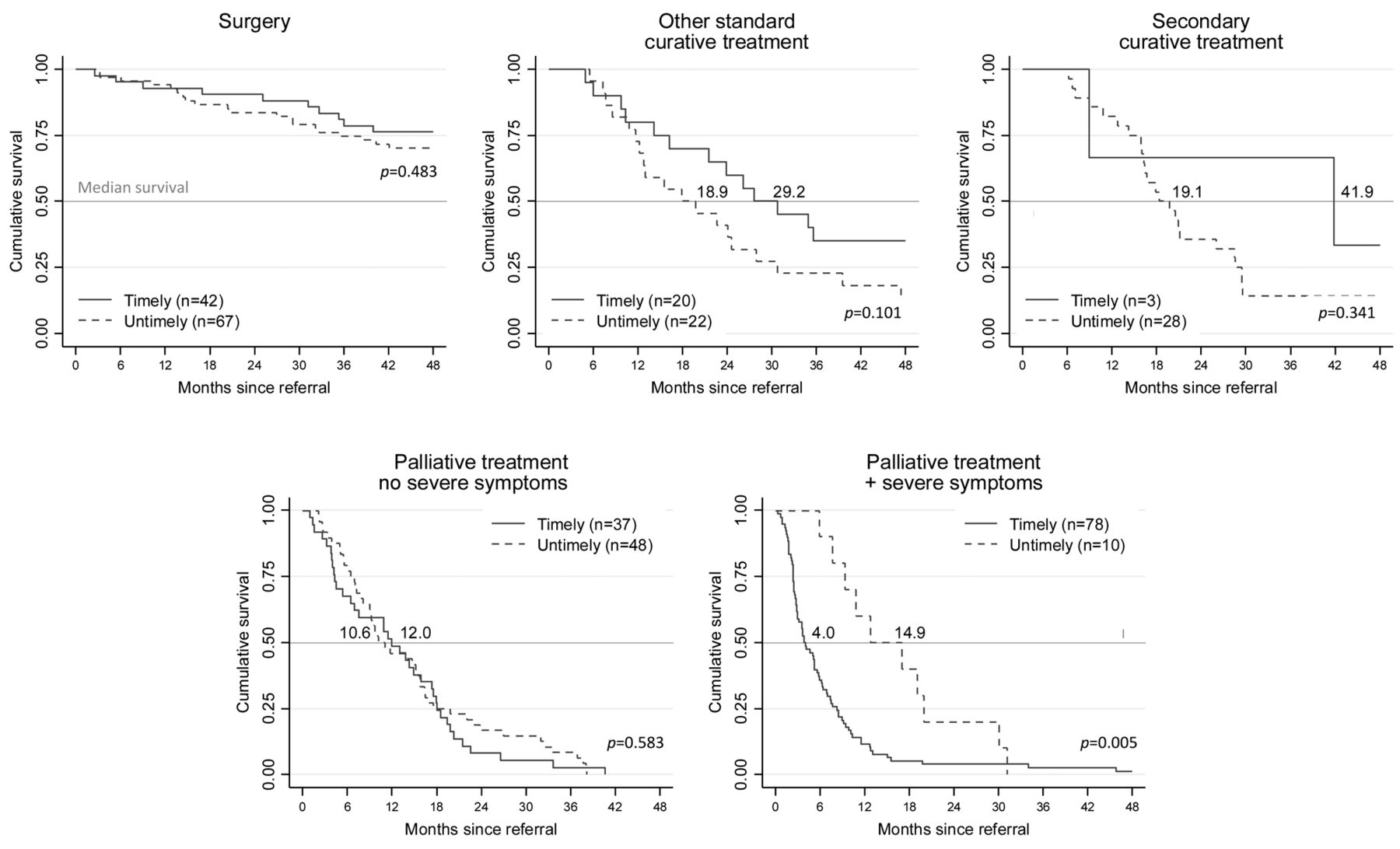
The subgroup analyses revealed that there were no survival differences between those who received timely and untimely treatment among those who underwent surgery, other standard curative therapy, or those who received palliative treatment and had no severe symptoms. For the group which received secondary curative treatment, there was a large numerical difference in median overall survival (timely=41.9 months, untimely=19.1 months; p=0.341), although only three patients started timely treatment in this group. Those who received untimely palliative treatment and had severe symptoms lived significantly longer than those who received timely treatment (14.9 vs. 3.9 months; p=0.005) (Figure 4).

Figure 4.
  • Download figure
  • Open in new tab
  • Download powerpoint
Figure 4.

Overall survival according to timeliness by treatment group.

Discussion

In this study of patients diagnosed with lung cancer at a regional cancer center in Norway, we found that patients who received timely treatment had a much shorter overall survival than those who started treatment later than recommended by the Norwegian guidelines. Subgroup analyses revealed that among those who received curative treatment, there was a survival benefit of timely treatment, while the opposite was the case among those who were offered palliative treatment. When analyzing patients who underwent surgery or other curative treatment separately, there was no survival benefit among those who received timely treatment. Among patients who received palliative treatment, there was no survival benefit of timely treatment among those with no severe symptoms. Among the group with severe cancer symptoms, those who received timely treatment had a significantly shorter survival than those who received untimely treatment.

The results of other studies of timeliness in cancer care are not consistent. It has been demonstrated that tumors grow and that the grade of invasion and the number of metastases can increase while waiting to start treatment (12-16, 35) but it is unclear whether this actually influences the prognosis of the patients when the time to treatment is shorter than 3 to 4 months. The recommended timeframes vary between countries, and many are longer than in Norway (24, 26, 30, 31).

Review articles published in 2009 (36) and 2015 (37) showed that most studies reported negative or no association of timely care and survival for patients with lung cancer survival, while positive associations were related to long intervals (>4 months) from mass screening until diagnosis (10, 11), or late referral to a specialist for symptomatic disease (38). Among more recent publications, five report positive associations of timely treatment and survival in those with localized disease (15-17, 24, 35), five studies found a negative association (18, 20, 23, 39, 40), while two found no associations at all (27, 29).

The retrospective, descriptive study design does, of course, not allow for assessing whether shortening the time from the start of diagnostic workup until the start of treatment influences a patient’s prognosis. It does, however, provide valuable information about the potential impact of reducing the diagnostic workup time. As we have previously reported (33), there is a large heterogeneity with respect to what kind and number of procedures are required before the diagnostic workup is completed in patients with lung cancer. Furthermore, some patients need treatment for concomitant diseases, indicating that the timeframes cannot and should not always be met.

The most important clinical factor that influenced the time for diagnostic workup in potentially curative disease in our cohort was poor lung function. Patients with lung cancer have a high comorbidity burden, higher than most other patients with cancer due to a relatively old age at diagnosis and a history of tobacco smoking (41-44). Not all patients are eligible for standard therapy due to comorbidity, and the treatment alternatives may be less effective (45, 46). In our cohort, many patients with poor lung function or other severe comorbidity received radiotherapy instead of surgery for stage I-II disease, and those who received secondary curative treatment had significantly shorter overall survival than those who underwent surgery. However, the patients in the secondary curative treatment group also had significantly shorter progression-free survival (data not shown), possibly suggesting that the survival difference was not only due to deaths caused by comorbidity, but also to inferior disease control from radiotherapy than achieved after surgery.

There is also a large heterogeneity between patients with the same stage of disease. Each patient’s cancer may behave biologically differently, and symptoms may provide prognostic information (47, 48). This was most evident among patients with advanced disease who received palliative treatment. As demonstrated in other studies, patients with severe cancer-related symptoms had a shorter prognosis than those without, even though their waiting time until treatment time was shorter (49-51).

Our study was a single-center study and the results may not be generalizable. Diagnostic work-up at our hospital during the study period was suboptimal due to limited positron-emission tomography CT capacity, and it was not possible to retrieve data on performance status due to missing data. On the other hand, our study cohort consisted of an unselected patient population, and data were complete and collected by a comprehensive review of each patient’s hospital medical records by an experienced physician (TS), and the sample size was fairly large. There were imbalances in baseline characteristics but some are covariates, e.g. stereotactic radiosurgery is only offered to patients without lymph node metastases, which explains the imbalance with respect to disease stage between the standard and secondary curative treatment groups. One might argue that the impact of time to treatment differs between important subgroups and should be analyzed separately. For example, small-cell lung cancer is the most rapidly-progressing subgroup of lung cancer and it is generally accepted that treatment should start as soon as possible, whereas patients with sensitizing epidermal growth factor receptor mutations receiving targeted therapy respond better to treatment than most other patients with advanced NSCLC, and survival may be less affected by time to treatment. The number of patients was too low to allow for such subgroup analyses but results were similar when excluding these patients (data not shown), and all recommended timeframes we are aware of apply for all patients with lung cancer.

The most surprising observation was that overall, patients who received untimely treatment had a longer survival than those who received timely treatment. Looking at the survival curves in Figure 4, it is evident that this finding is mainly due to a large difference between the groups among patients with severe symptoms who received palliative treatment. In this group, those with severe symptoms who received untimely treatment had weight loss as their main symptom, and it appears that the other symptoms we defined as severe in this setting are more strongly associated with a short prognosis. We still believe that our results illustrate that the complexity of the extent of disease, required diagnostic workup and treatment effect need to be taken into consideration when assessing quality of cancer care, and that time until treatment alone has limited value as a quality indicator.

A prospective randomized trial is needed in order to assess whether shortening the time until treatment improves survival. There are, however, several practical and ethical challenges associated with such a trial design, and our study does not indicate that time until treatment start alone is an important prognostic factor. Based on our previous analyses, however, we do believe that the number of diagnostic procedures, and hence the time for diagnostic workup, can be reduced by training healthcare personnel to choose wisely and adhere to guidelines (52). Thus, we believe that a system for continuous quality assurance of diagnostic workup is more feasible than a randomized trial and may be a better approach for improving outcomes for patients with lung cancer than solely focusing on reducing the time until treatment.

In conclusion, time until the start of treatment was a significant independent prognostic factor in our cohort of patients with lung cancer but the associations varied significantly between important subgroups of patients, indicating that reducing the time until treatment alone is unlikely to improve survival for all patients, and that a broader approach is needed to monitor and improve the quality of cancer care.

Acknowledgements

This work was supported by a grant from St. Olav’s hospital, Trondheim University Hospital in Trondheim, Norway. The funder had no role in the data collection and analysis and was not involved in the interpretation of results, writing, revision, or approval of the article.

Footnotes

  • Authors’ Contributions

    TS and BHG conceived and designed the study. TS collected data and performed data analyses. All Authors participated in the interpretation of the data and article writing.

  • This article is freely accessible online.

  • Conflicts of Interest

    The Authors have declared no conflicts of interest.

  • Received February 15, 2021.
  • Revision received March 11, 2021.
  • Accepted March 18, 2021.
  • Copyright © 2021 The Author(s). Published by the International Institute of Anticancer Research.

References

  1. ↵
    1. Siegel R,
    2. Ma J,
    3. Zou Z and
    4. Jemal A
    : Cancer statistics, 2014. CA Cancer J Clin 64(1): 9-29, 2014. PMID: 24399786. DOI: 10.3322/caac.21208
    OpenUrlCrossRefPubMed
    1. Pedersen AG
    : Hva dør man av i eu – og i Norge? Samfunnsspeilet/Statistics Norway 25(2): 82-87, 2011.
    OpenUrl
  2. ↵
    1. Torre LA,
    2. Bray F,
    3. Siegel RL,
    4. Ferlay J,
    5. Lortet-Tieulent J and
    6. Jemal A
    : Global cancer statistics, 2012. CA Cancer J Clin 65(2): 87-108, 2015. PMID: 25651787. DOI: 10.3322/caac.21262
    OpenUrlCrossRefPubMed
    1. Chen W,
    2. Zheng R,
    3. Baade PD,
    4. Zhang S,
    5. Zeng H,
    6. Bray F,
    7. Jemal A,
    8. Yu XQ and
    9. He J
    : Cancer statistics in China, 2015. CA Cancer J Clin 66(2): 115-132, 2016. PMID: 26808342. DOI: 10.3322/caac.21338
    OpenUrlCrossRefPubMed
  3. ↵
    1. Heron M
    : Deaths: Leading causes for 2016. Natl Vital Stat Rep 67(6): 1-77, 2018. PMID: 30248017.
    OpenUrlCrossRefPubMed
  4. ↵
    1. Neal RD
    : Do diagnostic delays in cancer matter? Br J Cancer 101(Suppl 2): S9-S12, 2009. PMID: 19956171. DOI: 10.1038/sj.bjc.6605384
    OpenUrlCrossRefPubMed
  5. ↵
    1. Ferlay J,
    2. Steliarova-foucher E,
    3. Lortet-tieulent J,
    4. Rosso S,
    5. Coebergh J,
    6. Comber H,
    7. Forman D and
    8. Bray F
    : Cancer incidence and mortality patterns in Europe: Estimates for 40 countries in 2012. European Journal of Cancer 49(6): 1374-1403, 2018. DOI: 10.1016/j.ejca.2012.12.027
    OpenUrlCrossRef
    1. Ferlay J,
    2. Shin HR,
    3. Bray F,
    4. Forman D,
    5. Mathers C and
    6. Parkin DM
    : Estimates of worldwide burden of cancer in 2008: GLOBOCAN 2008. Int J Cancer 127(12): 2893-2917, 2010. PMID: 21351269. DOI: 10.1002/ijc.25516
    OpenUrlCrossRefPubMed
  6. ↵
    1. Cancer registry of Norway, institute of population-based cancer research
    . Cancer in Norway. Available at: https://www.kreftregisteret.no/Generelt/Rapporter/Cancer-in-Norway/cancer-in-norway-2015/ [Last accessed on March 9, 2021]
  7. ↵
    1. Kashiwabara K,
    2. Koshi S,
    3. Itonaga K,
    4. Nakahara O,
    5. Tanaka M and
    6. Toyonaga M
    : Outcome in patients with lung cancer found on lung cancer mass screening roentgenograms, but who did not subsequently consult a doctor. Lung Cancer 40(1): 67-72, 2003. PMID: 12660008. DOI: 10.1016/s0169-5002(02)00505-6
    OpenUrlCrossRefPubMed
  8. ↵
    1. Kanashiki M,
    2. Satoh H,
    3. Ishikawa H,
    4. Yamashita YT,
    5. Ohtsuka M and
    6. Sekizawa K
    : Time from finding abnormality on mass-screening to final diagnosis of lung cancer. Oncol Rep 10(3): 649-652, 2003. PMID: 12684638.
    OpenUrlPubMed
  9. ↵
    1. Everitt S,
    2. Plumridge N,
    3. Herschtal A,
    4. Bressel M,
    5. Ball D,
    6. Callahan J,
    7. Kron T,
    8. Schneider-Kolsky M,
    9. Binns D,
    10. Hicks RJ and
    11. Mac Manus M
    : The impact of time between staging PET/CT and definitive chemo-radiation on target volumes and survival in patients with non-small cell lung cancer. Radiother Oncol 106(3): 288-291, 2013. PMID: 23490268. DOI: 10.1016/j.radonc.2013.02.010
    OpenUrlCrossRef
    1. Mohammed N,
    2. Kestin LL,
    3. Grills IS,
    4. Battu M,
    5. Fitch DL,
    6. Wong CY,
    7. Margolis JH,
    8. Chmielewski GW and
    9. Welsh RJ
    : Rapid disease progression with delay in treatment of non-small-cell lung cancer. Int J Radiat Oncol Biol Phys 79(2): 466-472, 2011. PMID: 20471184. DOI: 10.1016/j.ijrobp.2009.11.029
    OpenUrlCrossRefPubMed
    1. Murai T,
    2. Shibamoto Y,
    3. Baba F,
    4. Hashizume C,
    5. Mori Y,
    6. Ayakawa S,
    7. Kawai T,
    8. Takemoto S,
    9. Sugie C and
    10. Ogino H
    : Progression of non-small-cell lung cancer during the interval before stereotactic body radiotherapy. Int J Radiat Oncol Biol Phys 82(1): 463-467, 2012. PMID: 21095073. DOI: 10.1016/j.ijrobp.2010.10.001
    OpenUrlCrossRefPubMed
  10. ↵
    1. Samson P,
    2. Patel A,
    3. Garrett T,
    4. Crabtree T,
    5. Kreisel D,
    6. Krupnick AS,
    7. Patterson GA,
    8. Broderick S,
    9. Meyers BF and
    10. Puri V
    : Effects of delayed surgical resection on short-term and long-term outcomes in clinical stage I non-small cell lung cancer. Ann Thorac Surg 99(6): 1906-12; discussion 1913, 2015. PMID: 25890663. DOI: 10.1016/j.athoracsur.2015.02.022
    OpenUrlCrossRefPubMed
  11. ↵
    1. Coughlin S,
    2. Plourde M,
    3. Guidolin K,
    4. Fortin D,
    5. Frechette E,
    6. Malthaner R and
    7. Inculet R
    : Is it safe to wait? The effect of surgical wait time on survival in patients with non-small cell lung cancer. Can J Surg 58(6): 414-418, 2015. PMID: 26574834. DOI: 10.1503/cjs.007015
    OpenUrlCrossRef
  12. ↵
    1. Yang CJ,
    2. Wang H,
    3. Kumar A,
    4. Wang X,
    5. Hartwig MG,
    6. D’Amico TA and
    7. Berry MF
    : Impact of timing of lobectomy on survival for clinical stage IA lung squamous cell carcinoma. Chest 152(6): 1239-1250, 2017. PMID: 28800867. DOI: 10.1016/j.chest.2017.07.032
    OpenUrlCrossRefPubMed
  13. ↵
    1. Forrest LF,
    2. Adams J,
    3. Rubin G and
    4. White M
    : The role of receipt and timeliness of treatment in socioeconomic inequalities in lung cancer survival: Population-based, data-linkage study. Thorax 70(2): 138-145, 2015. PMID: 24923873. DOI: 10.1136/thoraxjnl-2014-205517
    OpenUrlAbstract/FREE Full Text
    1. Wang L,
    2. Correa CR,
    3. Hayman JA,
    4. Zhao L,
    5. Cease K,
    6. Brenner D,
    7. Arenberg D,
    8. Curtis J,
    9. Kalemkerian GP and
    10. Kong FM
    : Time to treatment in patients with stage III non-small cell lung cancer. Int J Radiat Oncol Biol Phys 74(3): 790-795, 2009. PMID: 19231108. DOI: 10.1016/j.ijrobp.2008.08.039
    OpenUrlCrossRefPubMed
  14. ↵
    1. Bullard JT,
    2. Eberth JM,
    3. Arrington AK,
    4. Adams SA,
    5. Cheng X and
    6. Salloum RG
    : Timeliness of treatment initiation and associated survival following diagnosis of non-small-cell lung cancer in South Carolina. South Med J 110(2): 107-113, 2017. PMID: 28158880. DOI: 10.14423/SMJ.0000000000000601
    OpenUrlCrossRef
    1. Diaconescu R,
    2. Lafond C and
    3. Whittom R
    : Treatment delays in non-small cell lung cancer and their prognostic implications. J Thorac Oncol 6(7): 1254-1259, 2011. PMID: 21610526. DOI: 10.1097/JTO.0b013e318217b623
    OpenUrlCrossRefPubMed
    1. Myrdal G,
    2. Lambe M,
    3. Hillerdal G,
    4. Lamberg K,
    5. Agustsson T and
    6. Ståhle E
    : Effect of delays on prognosis in patients with non-small cell lung cancer. Thorax 59(1): 45-49, 2004. PMID: 14694247.
    OpenUrlAbstract/FREE Full Text
  15. ↵
    1. Nadpara P,
    2. Madhavan S and
    3. Tworek C
    : Guideline-concordant timely lung cancer care and prognosis among elderly patients in the United States: A population-based study. Cancer Epidemiology 39(6): 1136-1144, 2019. DOI: 10.1016/j.canep.2015.06.005
    OpenUrlCrossRef
  16. ↵
    1. Kasymjanova G,
    2. Small D,
    3. Cohen V,
    4. Jagoe RT,
    5. Batist G,
    6. Sateren W,
    7. Ernst P,
    8. Pepe C,
    9. Sakr L and
    10. Agulnik J
    : Lung cancer care trajectory at a Canadian centre: An evaluation of how wait times affect clinical outcomes. Curr Oncol 24(5): 302-309, 2017. PMID: 29089797. DOI: 10.3747/co.24.3611
    OpenUrlCrossRef
    1. Gould MK,
    2. Ghaus SJ,
    3. Olsson JK and
    4. Schultz EM
    : Timeliness of care in veterans with non-small cell lung cancer. Chest 133(5): 1167-1173, 2008. PMID: 18263676. DOI: 10.1378/chest.07-2654
    OpenUrlCrossRefPubMed
  17. ↵
    1. Ost DE,
    2. Jim Yeung SC,
    3. Tanoue LT and
    4. Gould MK
    : Clinical and organizational factors in the initial evaluation of patients with lung cancer: Diagnosis and management of lung cancer, 3rd ed: American College of Chest Physicians evidence-based clinical practice guidelines. Chest 143(5 Suppl): e121S-e141S, 2013. PMID: 23649435. DOI: 10.1378/chest.12-2352
    OpenUrlCrossRefPubMed
  18. ↵
    1. Maiga AW,
    2. Deppen SA,
    3. Pinkerman R,
    4. Callaway-Lane C,
    5. Massion PP,
    6. Dittus RS,
    7. Lambright ES,
    8. Nesbitt JC,
    9. Baker D and
    10. Grogan EL
    : Timeliness of care and lung cancer tumor-stage progression: How long can we wait? Ann Thorac Surg 104(6): 1791-1797, 2017. PMID: 29033012. DOI: 10.1016/j.athoracsur.2017.06.051
    OpenUrlCrossRef
    1. Pita-Fernández S,
    2. Montero-Martinez C,
    3. Pértega-Diaz S and
    4. Verea-Hernando H
    : Relationship between delayed diagnosis and the degree of invasion and survival in lung cancer. J Clin Epidemiol 56(9): 820-825, 2003. PMID: 14505765. DOI: 10.1016/s0895-4356(03)00166-5
    OpenUrlCrossRefPubMed
  19. ↵
    1. Shin DW,
    2. Cho J,
    3. Kim SY,
    4. Guallar E,
    5. Hwang SS,
    6. Cho B,
    7. Oh JH,
    8. Jung KW,
    9. Seo HG and
    10. Park JH
    : Delay to curative surgery greater than 12 weeks is associated with increased mortality in patients with colorectal and breast cancer but not lung or thyroid cancer. Ann Surg Oncol 20(8): 2468-2476, 2013. PMID: 23529782. DOI: 10.1245/s10434-013-2957-y
    OpenUrlCrossRefPubMed
  20. ↵
    1. Christensen NL,
    2. Jekunen A,
    3. Heinonen S,
    4. Dalton SO and
    5. Rasmussen TR
    : Lung cancer guidelines in Sweden, Denmark, Norway and Finland: A comparison. Acta Oncol 56(7): 943-948, 2017. PMID: 28418710. DOI: 10.1080/0284186X.2017.1315172
    OpenUrlCrossRef
  21. ↵
    Guide to NHS waiting times in England. Available at: https://www.nhs.uk/using-the-nhs/nhs-services/hospitals/guide-to-nhs-waiting-times-in-england/ [Last accessed on March 10, 2021]
  22. ↵
    1. Asch SM,
    2. Kerr EA,
    3. Hamilton EG,
    4. Reifel JL and
    5. McGlynn EA
    (eds.): Quality of care for oncologic conditions and HIV: A review of the literature and quality indicators. RAND Corporation, Santa Monica, CA, MR-1281-AHRQ, pp. 133-151, 2000. Available at: https://www.rand.org/pubs/monograph_reports/MR1281.html [Last accessed on March 10, 2021]
  23. ↵
    1. Stokstad T,
    2. Sørhaug S,
    3. Amundsen T and
    4. Grønberg BH
    : Medical complexity and time to lung cancer treatment - a three-year retrospective chart review. BMC Health Serv Res 17(1): 45, 2017. PMID: 28095840. DOI: 10.1186/s12913-016-1952-y
    OpenUrlCrossRef
  24. ↵
    1. Detterbeck FC,
    2. Boffa DJ and
    3. Tanoue LT
    : The new lung cancer staging system. Chest 136(1): 260-271, 2009. PMID: 19584208. DOI: 10.1378/chest.08-0978
    OpenUrlCrossRefPubMed
  25. ↵
    1. Gomez DR,
    2. Liao KP,
    3. Swisher SG,
    4. Blumenschein GR,
    5. Erasmus JJ Jr.,
    6. Buchholz TA,
    7. Giordano SH and
    8. Smith BD
    : Time to treatment as a quality metric in lung cancer: Staging studies, time to treatment, and patient survival. Radiother Oncol 115(2): 257-263, 2015. PMID: 26013292. DOI: 10.1016/j.radonc.2015.04.010
    OpenUrlCrossRefPubMed
  26. ↵
    1. Olsson JK,
    2. Schultz EM and
    3. Gould MK
    : Timeliness of care in patients with lung cancer: A systematic review. Thorax 64(9): 749-756, 2009. PMID: 19717709. DOI: 10.1136/thx.2008.109330
    OpenUrlAbstract/FREE Full Text
  27. ↵
    1. Neal RD,
    2. Tharmanathan P,
    3. France B,
    4. Din NU,
    5. Cotton S,
    6. Fallon-Ferguson J,
    7. Hamilton W,
    8. Hendry A,
    9. Hendry M,
    10. Lewis R,
    11. Macleod U,
    12. Mitchell ED,
    13. Pickett M,
    14. Rai T,
    15. Shaw K,
    16. Stuart N,
    17. Tørring ML,
    18. Wilkinson C,
    19. Williams B,
    20. Williams N and
    21. Emery J
    : Is increased time to diagnosis and treatment in symptomatic cancer associated with poorer outcomes? Systematic review. Br J Cancer 112(Suppl 1): S92-107, 2015. PMID: 25734382. DOI: 10.1038/bjc.2015.48
    OpenUrlCrossRefPubMed
  28. ↵
    1. Buccheri G and
    2. Ferrigno D
    : Lung cancer: Clinical presentation and specialist referral time. Eur Respir J 24(6): 898-904, 2004. PMID: 15572529. DOI: 10.1183/09031936.04.00113603
    OpenUrlAbstract/FREE Full Text
  29. ↵
    1. Redaniel MT,
    2. Martin RM,
    3. Ridd MJ,
    4. Wade J and
    5. Jeffreys M
    : Diagnostic intervals and its association with breast, prostate, lung and colorectal cancer survival in England: Historical cohort study using the clinical practice research datalink. PLoS One 10(5): e0126608, 2015. PMID: 25933397. DOI: 10.1371/journal.pone.0126608
    OpenUrlCrossRefPubMed
  30. ↵
    1. Vinod SK,
    2. Chandra A,
    3. Berthelsen A and
    4. Descallar J
    : Does timeliness of care in non-small cell lung cancer impact on survival? Lung Cancer 112: 16-24, 2017. PMID: 29191589. DOI: 10.1016/j.lungcan.2017.07.032
    OpenUrlCrossRefPubMed
  31. ↵
    1. Janssen-Heijnen ML,
    2. Schipper RM,
    3. Razenberg PP,
    4. Crommelin MA and
    5. Coebergh JW
    : Prevalence of co-morbidity in lung cancer patients and its relationship with treatment: A population-based study. Lung Cancer 21(2): 105-113, 1998. PMID: 9829544. DOI: 10.1016/s0169-5002(98)00039-7
    OpenUrlCrossRefPubMed
    1. López-Encuentra A and Bronchogenic Carcinoma Co-operative Group
    : Comorbidity in operable lung cancer: A multicenter descriptive study on 2992 patients. Lung Cancer 35(3): 263-269, 2002. PMID: 11844600. DOI: 10.1016/s0169-5002(01)00422-6
    OpenUrlCrossRefPubMed
    1. Jeppesen SS,
    2. Hansen NG,
    3. Schytte T,
    4. Nielsen M and
    5. Hansen O
    : Comparison of survival of chronic obstructive pulmonary disease patients with or without a localized non-small cell lung cancer. Lung Cancer 100: 90-95, 2016. PMID: 27597286. DOI: 10.1016/j.lungcan.2016.08.006
    OpenUrlCrossRef
  32. ↵
    1. Kang HS,
    2. Shin AY,
    3. Yeo CD,
    4. Kim JS,
    5. Kim YH,
    6. Kim JW and
    7. Lee SH
    : A lower level of forced expiratory volume in one second predicts the poor prognosis of small cell lung cancer. J Thorac Dis 10(4): 2179-2185, 2018. PMID: 29850121. DOI: 10.21037/jtd.2018.03.121
    OpenUrlCrossRef
  33. ↵
    1. Tammemagi CM,
    2. Neslund-Dudas C,
    3. Simoff M and
    4. Kvale P
    : Impact of comorbidity on lung cancer survival. Int J Cancer 103(6): 792-802, 2003. PMID: 12516101. DOI: 10.1002/ijc.10882
    OpenUrlCrossRefPubMed
  34. ↵
    1. Hsu CL,
    2. Chen JH,
    3. Chen KY,
    4. Shih JY,
    5. Yang JC,
    6. Yu CJ and
    7. Yang PC
    : Advanced non-small cell lung cancer in the elderly: The impact of age and comorbidities on treatment modalities and patient prognosis. J Geriatr Oncol 6(1): 38-45, 2015. PMID: 25245172. DOI: 10.1016/j.jgo.2014.09.178
    OpenUrlCrossRefPubMed
  35. ↵
    1. Piccirillo JF and
    2. Feinstein AR
    : Clinical symptoms and comorbidity: Significance for the prognostic classification of cancer. Cancer 77(5): 834-842, 1996. PMID: 8608472.
    OpenUrlCrossRefPubMed
  36. ↵
    1. Tammemagi CM,
    2. Neslund-Dudas C,
    3. Simoff M and
    4. Kvale P
    : Lung carcinoma symptoms – an independent predictor of survival and an important mediator of African-American disparity in survival. Cancer 101(7): 1655-1663, 2004. PMID: 15378496. DOI: 10.1002/cncr.20547
    OpenUrlCrossRef
  37. ↵
    1. Forrest LF,
    2. Adams J,
    3. White M and
    4. Rubin G
    : Factors associated with timeliness of post-primary care referral, diagnosis and treatment for lung cancer: Population-based, data-linkage study. Br J Cancer 111(9): 1843-1851, 2014. PMID: 25203519. DOI: 10.1038/bjc.2014.472
    OpenUrlCrossRefPubMed
    1. Neal RD,
    2. Allgar VL,
    3. Ali N,
    4. Leese B,
    5. Heywood P,
    6. Proctor G and
    7. Evans J
    : Stage, survival and delays in lung, colorectal, prostate and ovarian cancer: Comparison between diagnostic routes. Br J Gen Pract 57(536): 212-219, 2007. PMID: 17359608.
    OpenUrlAbstract/FREE Full Text
  38. ↵
    1. Vinas F,
    2. Ben Hassen I,
    3. Jabot L,
    4. Monnet I and
    5. Chouaid C
    : Delays for diagnosis and treatment of lung cancers: a systematic review. Clin Respir J 10(3): 267-271, 2016. PMID: 25308518. DOI: 10.1111/crj.12217
    OpenUrlCrossRefPubMed
  39. ↵
    1. Stokstad T,
    2. Sørhaug S,
    3. Amundsen T and
    4. Grønberg BH
    : Reasons for prolonged time for diagnostic workup for stage I-II lung cancer and estimated effect of applying an optimized pathway for diagnostic procedures. BMC Health Serv Res 19(1): 679, 2019. PMID: 31533705. DOI: 10.1186/s12913-019-4517-z
    OpenUrlCrossRef
PreviousNext
Back to top

In this issue

In Vivo
Vol. 35, Issue 3
May-June 2021
  • Table of Contents
  • Table of Contents (PDF)
  • Index by author
  • Back Matter (PDF)
  • Ed Board (PDF)
  • Front Matter (PDF)
Print
Download PDF
Article Alerts
Sign In to Email Alerts with your Email Address
Email Article

Thank you for your interest in spreading the word on In Vivo.

NOTE: We only request your email address so that the person you are recommending the page to knows that you wanted them to see it, and that it is not junk mail. We do not capture any email address.

Enter multiple addresses on separate lines or separate them with commas.
Associations Between Time to Treatment Start and Survival in Patients With Lung Cancer
(Your Name) has sent you a message from In Vivo
(Your Name) thought you would like to see the In Vivo web site.
CAPTCHA
This question is for testing whether or not you are a human visitor and to prevent automated spam submissions.
7 + 13 =
Solve this simple math problem and enter the result. E.g. for 1+3, enter 4.
Citation Tools
Associations Between Time to Treatment Start and Survival in Patients With Lung Cancer
TRINE STOKSTAD, SVEINUNG SØRHAUG, TORE AMUNDSEN, BJØRN H. GRØNBERG
In Vivo May 2021, 35 (3) 1595-1603; DOI: 10.21873/invivo.12416

Citation Manager Formats

  • BibTeX
  • Bookends
  • EasyBib
  • EndNote (tagged)
  • EndNote 8 (xml)
  • Medlars
  • Mendeley
  • Papers
  • RefWorks Tagged
  • Ref Manager
  • RIS
  • Zotero
Reprints and Permissions
Share
Associations Between Time to Treatment Start and Survival in Patients With Lung Cancer
TRINE STOKSTAD, SVEINUNG SØRHAUG, TORE AMUNDSEN, BJØRN H. GRØNBERG
In Vivo May 2021, 35 (3) 1595-1603; DOI: 10.21873/invivo.12416
Twitter logo Facebook logo Mendeley logo
  • Tweet Widget
  • Facebook Like
  • Google Plus One

Jump to section

  • Article
    • Abstract
    • Patients and Methods
    • Results
    • Discussion
    • Acknowledgements
    • Footnotes
    • References
  • Figures & Data
  • Info & Metrics
  • PDF

Related Articles

Cited By...

  • Disparities in Time to Treatment for Skin Cancer
  • Google Scholar

More in this TOC Section

  • Risk Factors and Clinical Significance of Grade ≥3 Neutropenia During the First Cycle of Cabazitaxel Therapy With Primary Pegfilgrastim Prophylaxis in Metastatic Castration-resistant Prostate Cancer
  • Impact of Donor Cirrhosis Outcome Risk Estimator (CORE) Score on Recipient Outcomes Following Living-donor Liver Transplantation
  • The Clinical Impact of Textbook Outcome in Patients With Stage 1 Gastric Cancer Who Received Laparoscopy-assisted Gastrectomy or Robotic-assisted Gastrectomy
Show more Clinical Studies

Keywords

  • Quality of healthcare
  • quality indicator
  • delayed treatment
  • treatment outcomes
  • cancer care
In Vivo

© 2026 In Vivo

Powered by HighWire