Main menu

  • Home
  • Current Issue
  • Archive
  • Info for
    • Authors
    • Editorial Policies
    • Advertisers
    • Editorial Board
    • Special Issues
  • Journal Metrics
  • Other Publications
    • Anticancer Research
    • Cancer Genomics & Proteomics
    • Cancer Diagnosis & Prognosis
  • More
    • IIAR
    • Conferences
  • About Us
    • General Policy
    • Contact
  • Other Publications
    • In Vivo
    • Anticancer Research
    • Cancer Genomics & Proteomics

User menu

  • Register
  • Subscribe
  • My alerts
  • Log in
  • My Cart

Search

  • Advanced search
In Vivo
  • Other Publications
    • In Vivo
    • Anticancer Research
    • Cancer Genomics & Proteomics
  • Register
  • Subscribe
  • My alerts
  • Log in
  • My Cart
In Vivo

Advanced Search

  • Home
  • Current Issue
  • Archive
  • Info for
    • Authors
    • Editorial Policies
    • Advertisers
    • Editorial Board
    • Special Issues
  • Journal Metrics
  • Other Publications
    • Anticancer Research
    • Cancer Genomics & Proteomics
    • Cancer Diagnosis & Prognosis
  • More
    • IIAR
    • Conferences
  • About Us
    • General Policy
    • Contact
  • Visit iiar on Facebook
  • Follow us on Linkedin
Review ArticleReviewsR

Telomere Length and Hematological Disorders: A Review

BEATRIZ MARIA DIAS NOGUEIRA, CAIO BEZERRA MACHADO, RAQUEL CARVALHO MONTENEGRO, MARIA ELISABETE AMARAL DE MORAES and CAROLINE AQUINO MOREIRA-NUNES
In Vivo November 2020, 34 (6) 3093-3101; DOI: https://doi.org/10.21873/invivo.12142
BEATRIZ MARIA DIAS NOGUEIRA
Pharmacogenetics Laboratory, Drug Research and Development Center (NPDM), Department of Physiology and Pharmacology, Federal University of Ceará, Fortaleza, CE, Brazil
  • Find this author on Google Scholar
  • Find this author on PubMed
  • Search for this author on this site
CAIO BEZERRA MACHADO
Pharmacogenetics Laboratory, Drug Research and Development Center (NPDM), Department of Physiology and Pharmacology, Federal University of Ceará, Fortaleza, CE, Brazil
  • Find this author on Google Scholar
  • Find this author on PubMed
  • Search for this author on this site
RAQUEL CARVALHO MONTENEGRO
Pharmacogenetics Laboratory, Drug Research and Development Center (NPDM), Department of Physiology and Pharmacology, Federal University of Ceará, Fortaleza, CE, Brazil
  • Find this author on Google Scholar
  • Find this author on PubMed
  • Search for this author on this site
MARIA ELISABETE AMARAL DE MORAES
Pharmacogenetics Laboratory, Drug Research and Development Center (NPDM), Department of Physiology and Pharmacology, Federal University of Ceará, Fortaleza, CE, Brazil
  • Find this author on Google Scholar
  • Find this author on PubMed
  • Search for this author on this site
CAROLINE AQUINO MOREIRA-NUNES
Pharmacogenetics Laboratory, Drug Research and Development Center (NPDM), Department of Physiology and Pharmacology, Federal University of Ceará, Fortaleza, CE, Brazil
  • Find this author on Google Scholar
  • Find this author on PubMed
  • Search for this author on this site
  • For correspondence: carolfam{at}gmail.com
  • Article
  • Figures & Data
  • Info & Metrics
  • PDF
Loading

Abstract

Telomeres compose the end portions of human chromosomes, and their main function is to protect the genome. In hematological disorders, telomeres are shortened, predisposing to genetic instability that may cause DNA damage and chromosomal rearrangements, inducing a poor clinical outcome. Studies from 2010 to 2019 were compiled and experimental studies using samples of patients diagnosed with hematological malignancies that reported the size of the telomeres were described. Abnormal telomere shortening is described in cancer, but in hematological neoplasms, telomeres are still shortened even after telomerase reactivation. In this study, we compared the sizes of telomeres in leukemias, myelodysplastic syndrome and lymphomas, identifying that the smallest telomeres are present in patients at relapse. In conclusion, the experimental and clinical data analyzed in this review demonstrate that excessive telomere shortening is present in major hematological malignancies and its analysis and measurement is a crucial step in determining patient prognosis, predicting disease risk and assisting in the decision for targeted therapeutic strategies.

  • Telomere length
  • cancer
  • hematological disorders
  • review

The word telomere originates from the Greek words τέλοφ (telos, end, extremity)+μέροφ (meros, part), meaning “part of the extremity”. The telomeres compose the end portions of chromosomes and consist of many 5’-TTAGGG-3’ non-coding repeats (1).

During a normal lifespan, telomeres naturally shorten. However, this can become a problem when excessive telomere shortening is observed in stem cells of both pediatric and adult patients. Healthy cells are predisposed to a division limit, also known as Hayflick limit, of 50 to 70 divisions before the cell undergoes senesce or apoptosis due to telomere attrition (2, 3).

Short telomeres are associated with genetic instability, which may characterize them as a predisposition factor for hematological malignancies (4, 5).

Human Telomeres and their Functions

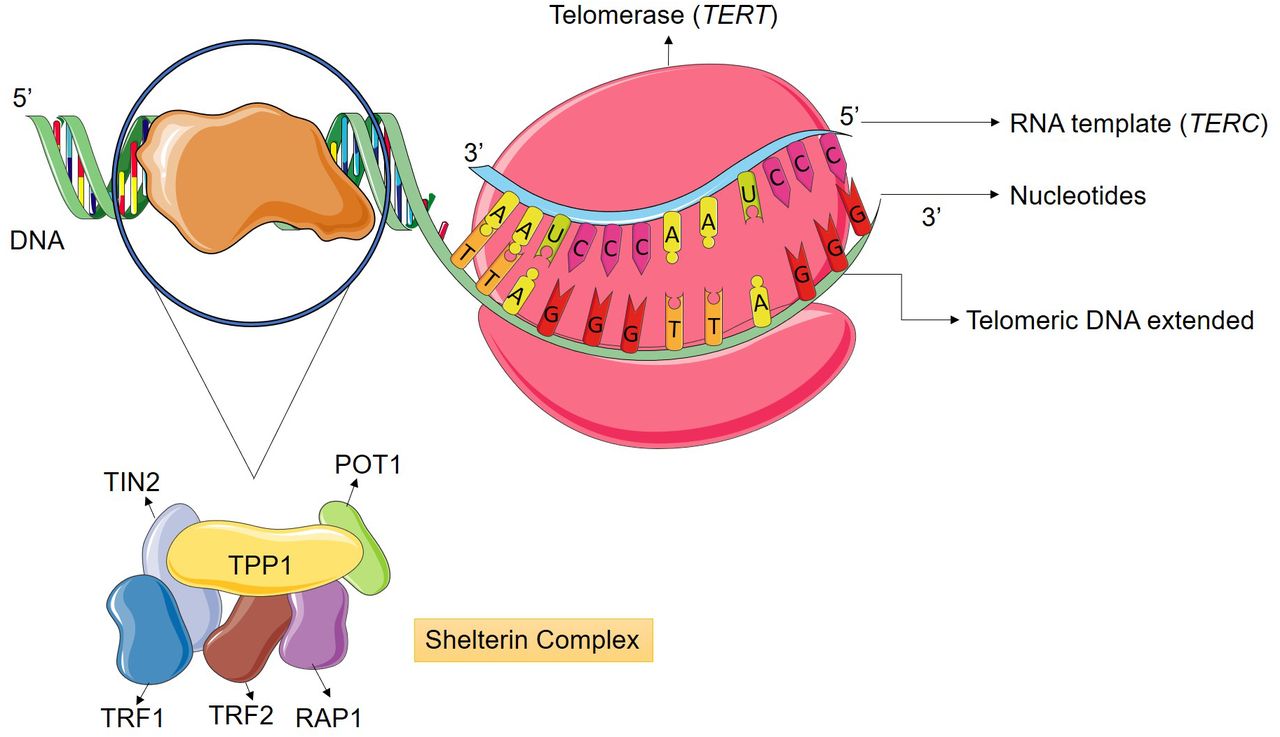
Human telomeres are the end portions of chromosomes, which act primarily in DNA protection and genomic stability, preventing fusions and damage to the genetic material. Telomeres are composed of approximately 1000 to 2000 base pairs or 5-12 kb of non-coding TTAGGG repeats, which interacts with a group of proteins denominated as Shelterin complex (Figure 1) (3, 6-8).

A major characteristic of telomeres is their progressive shortening that happens naturally with each division of somatic cells. The shortening occurs due to the DNA end replication problem, which consists of the inability of the cellular machinery to effectively synthesize the chromosomes ends during replication, alongside with the lack or insufficiency of pathways that promote telomere elongation, such as telomerase activity or the alternative lengthening of telomeres (ALT) (9-11).

Telomere elongation occurs primarily by human telomerase (hTERT) activity, which is a ribonucleoprotein enzyme specialized in neutralizing telomeric DNA attrition by synthesizing new TTAGGG repeats at chromosome ends. This enzyme is composed by two subunits; the catalytic domain is the telomerase reverse transcriptase (TERT), which utilizes the telomerase messenger RNA (TERC) subunit as a complementary template for the addition of nucleic acids to the telomere. The replicative immortality in most tumors is associated with a loss of homeostasis in the telomere-telomerase complex, being characterized by telomere elongation and in 90% of the cases it is due to the reactivation of telomerase enzyme (Figure 2) (12-14).
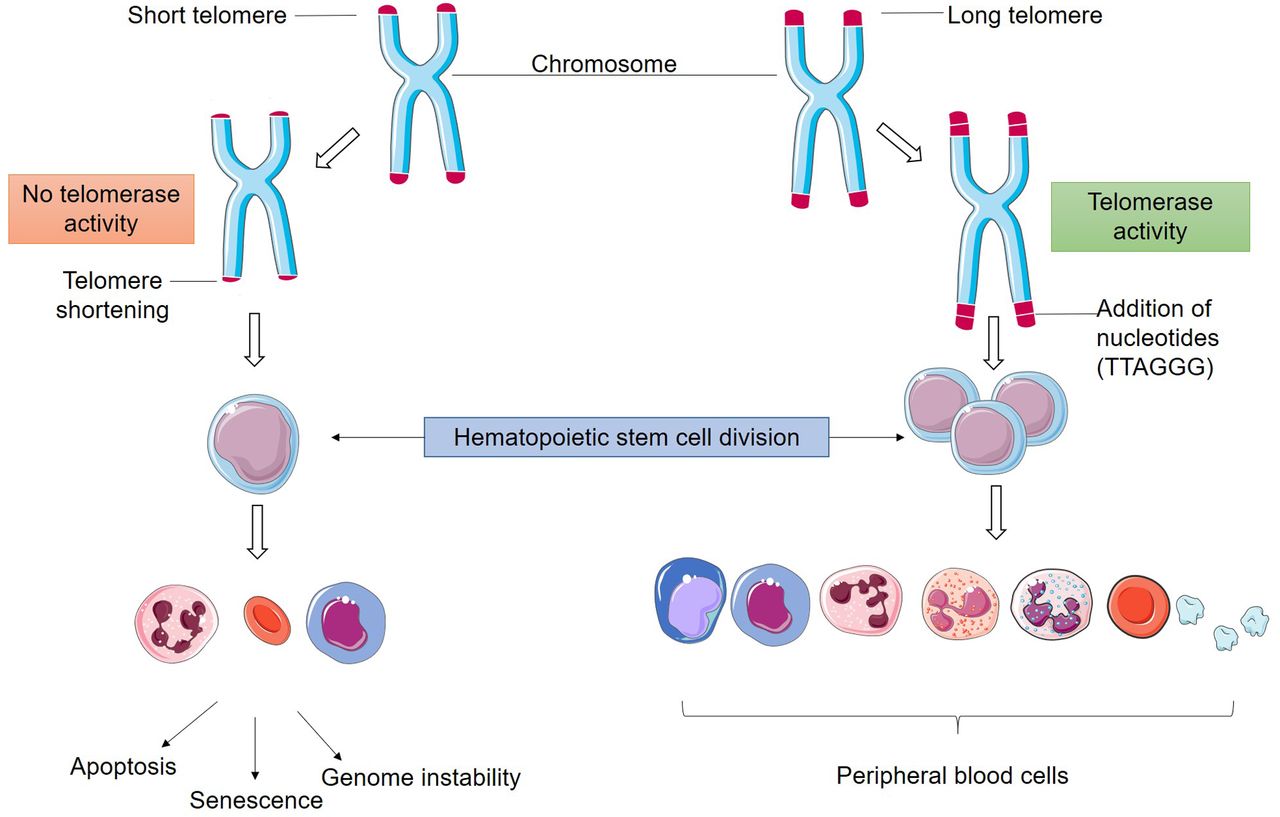
Figure 1.
  • Download figure
  • Open in new tab
  • Download powerpoint
Figure 1.

Hematopoietic stem cells express intrinsic telomerase activity which is required to sustain their accelerated replication cycle. When telomerase activity is lacking hematopoietic stem cells become unstable, leading to DNA damage and consequent bone marrow failure (5).

Telomere and Telomerase in Human Cancer

Cells with malignant potential can adapt and escape replicative senescence, by suppressing DNA damage response mechanisms or by over-activating telomere maintenance pathways, such as telomerase activity, and thus acquiring immortality and initiating the tumorigenesis process (15).

Dysfunctions affecting the telomere complex might expose the DNA to enzymatic degradation leading to breaks, deletions, fusions and accumulation of DNA mutations. The consequence of this genomic instability is cancer progression and a worse prognosis for the afflicted patients (16, 17).

The risk for cancer development aggravates in relation to the decrease in telomere length (TL) and after the disease is consolidated the telomeres tend to elongate once again. This observation shows that critically shortened and dysfunctional telomeres contribute to genetic instability and oncogenesis (1, 17, 18).

Telomeres in Hematopoietic Dysfunction

The lifespan of mature hematopoietic cells is very limited, demanding their constant production and replacement by the bone marrow. It is expected that hematopoietic cells replicate 50 to 200 times before proceeding to replicative senescence (19).

The telomere attrition in stem cell is accelerated during an individual's early years of life, when one stem cell will replicate from 15 to 30 times. During the adult life, between 50 and 60 years, telomere shortening progresses more slowly, however, after this period it accelerates once again. In T lymphocytes 33 base pairs of telomeric sequence are usually lost every year, while B lymphocytes only lose around 15 base pairs a year (19, 20).

Mature hematopoietic cells derive from the proliferation of hematopoietic stem and progenitor cells (HSPC). The stem cells are capable of auto-renewal and production of other stem cells, however, this renewal will only occur when these cells are near senescence and in need of replacement. Usually, the telomeres of stem cells shorten over the years, but when this shortening is excessive it may lead to bone marrow insufficiency and failure, predisposing stem cells to malignancy (19, 21, 22).

Figure 2.
  • Download figure
  • Open in new tab
  • Download powerpoint
Figure 2.

Telomerase enzyme counteracts nucleotide loss during cell replication. The catalytic domain has telomerase reverse transcriptase (TERT) activity, which utilizes the telomerase mRNA (TERC) subunit as a complementary template for the addition of nucleotides to telomeric DNA. The Shelterin complex is composed of six proteins (POT1, TPP1, TRF1, TRF2, TIN2 and Rap1) responsible for maintaining genetic integrity, assisting in the prevention of excessive DNA damage and regulating telomere-telomerase interaction. The complex protects telomeric DNA from unwanted degradation and chromosomal fusions (13).

Although the standard model of oncogenesis for the majority of cancers predicts the presence of telomerase over-expression and consequent telomere elongation, some cancer subtypes are able to maintain an indefinite proliferation by expressing telomerase but not necessarily elongating the telomeres, as is the case of hematological neoplasms (1, 10, 23, 24).

Hematological Malignancies

Most hematological neoplasms possess an uncertain etiology, however, there are some predisposing factors. Malignant transformations initiate due to complex interactions between genetic factors such as chromosomal rearrangements, aneuploidies, punctual mutations, deletions, insertions, duplications and amplifications. Among them, chromosomal translocations and aneuploidies are the main biomarkers for genetic instability and development of hematological malignancies (25, 26).

The dysfunctional shortening of telomeres may be present in congenital anemias, as in Fanconi anemia or Shwachman Diamond syndrome, but disease progression and telomere shortening do not have a strong association. However, telomere shortening alongside chromosomal mutations and telomerase reactivation may be predisposing factors for the development of hematological neoplasms such as myelodysplastic syndrome and leukemias (5, 27).

Hematological disorders usually present similar clinical signs amongst each other, making an early differential diagnosis necessary. The occurrence of telomere shortening in hematological malignancies is associated with major genomic rearrangements and DNA damage that is not detected in cells with longer telomeres. This observation leads to the understanding that the study and analyses of TL is of utmost importance for a better prognosis of patients in the clinical practice (15, 28).

Telomere Length and Hematological malignancies

Table I presents studies relating telomere length and prognosis of patients afflicted by hematological malignancies.

Myelodysplastic syndromes (MDS) are a heterogeneous group of clonal diseases that are characterized by an ineffective hematopoiesis consequentially leading to cytopenia and dysplasia in the peripheral blood. MDS patients express a progressive shortening of the telomeres which leads to persistent physiological damage to the DNA and other classical MDS characteristics, demonstrating a correlation between TL, MDS pathophysiology and progression to malignancy as acute myeloid leukemia (15, 21, 48, 49).

View this table:
  • View inline
  • View popup
Table I.

Cytogenetics and prognosis associated with shorter telomeres at diagnosis of hematological malignancies.

Leukemias are malignant disorders characterized by increased numbers of white blood cells in the peripheral blood or bone marrow. In chronic leukemias there is usually a prevalence of defective mature cells that may have a myeloid origin, as in chronic myeloid leukemia (CML), or a lymphoid origin, as in chronic lymphoid leukemia (CLL). On the other hand, in acute leukemias there is a predominance of blastic cells, being determined as acute myeloid leukemia (AML) or acute lymphoid leukemia (ALL) (50).

Amongst acute leukemias, ALL patients express shorter telomeres than AML patients, however, as the diseases progress, AML telomeres tend to shorten in an increased pace compared to ALL telomeres. ALL expressing a malignant phenotype for B lymphocytes present shorter telomeres than those from AML (41, 51, 52).

CML usually originates from a reciprocal translocation between chromosome 9 and chromosome 22, creating the Philadelphia chromosome (Ph+) and the chimeric gene BCR-ABL. Telomeres are shorter in CML during the accelerated phase and blast crisis when compared to the chronic phase. Moreover, in patients afflicted by CLL, there is an association between shorter telomeres and an unfavorable prognosis (15, 41, 52-54).

Telomere Length Studies

The most common neoplasms related to shorter telomeres and age are MDS and AML (49). Patients with short telomeres present a greater risk for developing MDS, even though only a minor percentage actually does (36, 49).

The TL of patients afflicted by AML and those with a high risk for MDS were analyzed simultaneously; in both cases TL was similar (31, 35). In a study by Warny et al., TL was analyzed in three stages, the first was at disease diagnosis, the second was during treatment, where telomere elongation was already observed, and the third at patient relapse when it was estimated that TL was shorter than at the time of diagnosis (31).

Patients diagnosed with AML have shown a notable shortening of telomeres and those with longer telomeres present an increased overall survival at 6-month period compared to those with shorter telomeres (37, 38). Patients with complex cytogenetics tend to express shorter telomeres in comparison to those with a normal karyotype. The TL also changes in comparison to treatment outset and complete remission, showing an elongation pattern in the bone marrow cells from patients at treatment completion, when compared to normal cells (55).

Acute Promyelocytic Leukemia (APL) is an AML subtype presenting an incidence of 10 to 15% of AML cases (56). Telomeres in APL patients are shorter in comparison to healthy controls and their length is comparable to that of patients afflicted by regular AML. Patients in complete remission from APL demonstrate considerable telomere elongation, suggesting that TL is a predictive marker for patient prognosis (39).

In regard to patients diagnosed with ALL presenting complex karyotypes, the telomeres are shorter than those of patients harboring normal karyotypes (55). It has also been observed that adult patients diagnosed with ALL have short telomeres, indicating aggressive disease (51, 55).

In CLL, telomeres are shorter in B lymphocytes lineages than in T lymphocytes and these shorter telomeres are also associated with chromosomal aberrations (44, 45). In a study conducted by Steinbrecher et al., shorter telomeres were observed in CLL patients compared to controls, and 83% of the analyzed patients had telomeres shorter than the average (33).

Defining the TL in CLL might help predict the disease risk and propose a specific therapeutic course for patients, as shorter telomeres have a strong association with an inferior progression free survival (PFS) and disease aggressiveness (29, 30, 34, 40, 42, 46, 47, 57, 58).

Mantle cell lymphoma (MCL) is an aggressive lymphoma subtype, representing only 4% of lymphoma cases (59). In a study conducted by Jebaraji et al., TL in MCL cells was not significantly associated with chromosomal aberrations, while CLL patients harboring complex karyotypes had a strong association with shorter telomeres, suggesting that the increase in aberration incidence was a consequence of genomic instability caused by telomere attrition (43).

Hairy cell leukemia (HCL) is a mature B lymphocyte leukemia, which presents a distinct immunophenotype and is classified in two subgroups: the classic HCL and HCL variant (HCL-v) (60). In a study conducted by Arons et al., it was shown that patients afflicted by HCL had longer telomeres than those afflicted by HCL-v, suggesting that the poorer prognosis associated with HCL-v might be due to increased telomere attrition (41). Furthermore, in a study by Walsh et al., TL was found to be longer in classic HCL patients than in those diagnosed with CLL (61).

Ohyashiki et al., observed that individuals diagnosed with CML had shorter telomeres in comparison to healthy controls, increased predisposition to developing blast crises as well as greater disease severity during the chronic phase. Patients undergoing blastic phase presented shorter TL than expected by their age and also when compared to chronic phase patients (62). Caocci et al., suggested that telomere shortening in CML cases happens before Philadelphia chromosome origination, and influences chromosomal instability and disease progression (63).

Bouillon et al., found that telomeres of CML patients were shorter in leukemic stem cells than in hematopoietic stem cells. Furthermore, leukemic cells can alter normal hematopoietic cells through extrinsic pathways that impact in the differentiation and auto-renewal cellular capacity, also altering the TL of hematopoietic cells. This study suggested that non-leukemic cells may already present a deficit in TL that would contribute to disease onset and progression (32).

Telomere homeostasis disorders have been heavily associated with leukemogenesis and neoplasm treatment, especially when these disorders induce telomere attrition. The “telomere crises” influences resistance to chemotherapy as their shortening might induce karyotype complexity and malignant cell adaptation, allowing their increased proliferation to overcome treatment cytotoxicity (42, 43, 47, 64, 65).

Conclusion

Experimental and clinical data analyzed in this review demonstrate that excessive telomere shortening is present in major hematological malignancies and its analyses and measurement is a crucial step in determining patient prognosis, predicting disease risk and assisting in the decision for targeted therapeutic strategies.

Acknowledgements

This study was supported by Brazilian funding agencies National Counsel of Technological and Scientific Development (CNPq; to RCM, MEAM and CAMN).

Footnotes

  • Authors' Contributions

    Nogueira BMD, Machado CB and Moreira-Nunes CA designed the study; Nogueira BMD, Machado CB and Moreira-Nunes CA prepared the figures; Nogueira BMD, Machado CB, Montenegro RC, Moraes MEA and Moreira-Nunes CA wrote the article; Nogueira BMD, Machado CB and Moreira-Nunes CA revised the final version. All Authors read and approved the final article.

  • This article is freely accessible online.

  • Conflicts of Interest

    The Authors declare no conflicts of interest regarding this study.

  • Received July 27, 2020.
  • Revision received August 6, 2020.
  • Accepted August 10, 2020.
  • Copyright © 2020 The Author(s). Published by the International Institute of Anticancer Research.

References

  1. ↵
    1. Herrmann M,
    2. Pusceddu I,
    3. März W,
    4. Herrmann W
    : Telomere biology and age-related diseases. Clin Che Lab Med 56: 1210-1222, 2018. PMID: 29494336. DOI: 10.1515/cclm-2017-0870
    OpenUrl
  2. ↵
    1. Marcon F,
    2. Siniscalchi E,
    3. Crebelli R,
    4. Saieva C,
    5. Sera F,
    6. Fortini P,
    7. Simonelli V,
    8. Palli D
    : Diet-related telomere shortening and chromosome stability. Mutagenesis 27: 49-57, 2011. PMID: 21857007. DOI: 10.1093/mutage/ger056
    OpenUrl
  3. ↵
    1. Wu L,
    2. Fidan K,
    3. Um JY,
    4. Ahn KS
    : Telomerase: Key regulator of inflammation and cancer. Pharmacol Res 155: 104726, 2020. PMID: 32109579. DOI: 10.1016/j.phrs.2020.104726
    OpenUrl
  4. ↵
    1. Werner B,
    2. Beier F,
    3. Hummel S,
    4. Balabanov S,
    5. Lassay L,
    6. Orlikowsky T,
    7. Dingli D,
    8. Brümmendorf TH,
    9. Traulsen A
    : Reconstructing the in vivo dynamics of hematopoietic stem cells from telomere length distributions. eLife 4: 2015. PMID: 26468615. DOI: 10.7554/elife.08687
  5. ↵
    1. Paiva RM,
    2. Calado RT
    : Telomere dysfunction and hematologic disorders. Prog Mol Biol Transl Sci 125: 133-157, 2014. PMID: 24993701. DOI: 10.1016/b978-0-12-397898-1.00006-2
    OpenUrl
  6. ↵
    1. Gancarcíková M,
    2. Zemanová Z,
    3. Brezinová J,
    4. Berková A,
    5. Vcelíková S,
    6. Smigová J,
    7. Michalová K
    : The role of telomeres and telomerase complex in haematological neoplasia: The length of telomeres as a marker of carcinogenesis and prognosis of disease. Prague Med Rep 111: 91-105, 2010. PMID: 20653999.
    OpenUrlPubMed
    1. Shay JW,
    2. Wright WE
    : Telomeres and telomerase: Three decades of progress. Nat Rev Genet 20: 299-309, 2019. PMID: 30760854. DOI: 10.1038/s41576-019-0099-1
    OpenUrlCrossRefPubMed
  7. ↵
    1. Ram R,
    2. Uziel O,
    3. Lahav M
    : The importance of the telomere and telomerase system in hematological malignancies. Leukemia Lymphoma 46: 1121-1135, 2005. PMID: 16085552. DOI: 10.1080/10428190500125853
    OpenUrl
  8. ↵
    1. Yuan X,
    2. Dai M,
    3. Xu D
    : Telomere-related markers for cancer. Curr Top Med Chem 20: 410-432, 2020. PMID: 31903880. DOI: 10.2174/1568026620666200106145340
    OpenUrl
  9. ↵
    1. Roake CM,
    2. Artandi SE
    : Regulation of human telomerase in homeostasis and disease. Nat Rev Mol Cell Biol 21: 384-397, 2020. PMID: 32242127. DOI: 10.1038/s41580-020-0234-z
    OpenUrl
  10. ↵
    1. Wellinger,
    2. Raymund J
    : In the end, what's the problem? Mol Cell 53: 855-856, 2014. PMID: 24656125. DOI: 10.1016/j. molcel.2014.03.008
    OpenUrlPubMed
  11. ↵
    1. Lee DD,
    2. Leão R,
    3. Komosa M,
    4. Gallo M,
    5. Zhang CH,
    6. Lipman T,
    7. Remke M,
    8. Heidari A,
    9. Nunes NM,
    10. Apolónio JD,
    11. Price AJ,
    12. Mello RAD,
    13. Dias JS,
    14. Huntsman D,
    15. Hermanns T,
    16. Wild PJ,
    17. Vanner R,
    18. Zadeh G,
    19. Karamchandani J,
    20. Das S,
    21. Taylor MD,
    22. Hawkins CE,
    23. Wasserman JD,
    24. Figueiredo A,
    25. Hamilton RJ,
    26. Minden MD,
    27. Wani K,
    28. Diplas B,
    29. Yan H,
    30. Aldape K,
    31. Akbari MR,
    32. Danesh A,
    33. Pugh TJ,
    34. Dirks PB,
    35. Castelo-Branco P,
    36. Tabori U
    : DNA hypermethylation within TERT promoter upregulates TERT expression in cancer. J Clin Invest 129: 223-229, 2018. PMID: 30932912. DOI: 10.1172/jci121303
    OpenUrl
  12. ↵
    1. Smith EM,
    2. Pendlebury DF,
    3. Nandakumar J
    : Structural biology of telomeres and telomerase. Cell Mol Life Sci 77: 61-79, 2019. PMID: 31728577. DOI: 10.1007/s00018-019-03369-x
    OpenUrl
  13. ↵
    1. Rubtsova M,
    2. Dontsova O
    : Human telomerase RNA: Telomerase component or more?” Biomolecules 10: 873, 2020. PMID: 32517215. DOI: 10.3390/biom10060873
    OpenUrl
  14. ↵
    1. Vasko T,
    2. Kaifie A,
    3. Stope M,
    4. Kraus T,
    5. Ziegler P
    : Telomeres and telomerase in hematopoietic dysfunction: prognostic implications and pharmacological interventions. Int J Mol Sci 18: 2267, 2017. PMID: 29143804. DOI: 10.3390/ijms18112267
    OpenUrl
  15. ↵
    1. Fiorini E,
    2. Santoni A,
    3. Colla S
    : Dysfunctional telomeres and hematological disorders. Differentiation 100: 1-11, 2018. PMID: 29331736. DOI: 10.1016/j.diff.2018.01.001
    OpenUrl
  16. ↵
    1. M'Kacher R,
    2. Colicchio B,
    3. Borie C,
    4. Junker S,
    5. Marquet V,
    6. Heidingsfelder L,
    7. Soehnlen K,
    8. Najar W,
    9. Hempel WM,
    10. Oudrhiri N,
    11. Wilhelm-Murer N,
    12. Miguet M,
    13. Arnoux M,
    14. Ferrapie C,
    15. Kerbrat W,
    16. Plesch A,
    17. Dieterlen A,
    18. Girinsky T,
    19. Voisin P,
    20. Deschenes G,
    21. Tabet A-C,
    22. Yardin C,
    23. Bennaceur-Griscelli A,
    24. Fenech M,
    25. Carde P,
    26. Jeandidier E
    : Telomere and centromere staining followed by M-FISH improves diagnosis of chromosomal instability and its clinical utility. Genes 11: 475, 2020. PMID: 32349350. DOI: 10.3390/genes11050475
    OpenUrl
  17. ↵
    1. Sheng X,
    2. Tong N,
    3. Tao G,
    4. Luo D,
    5. Wang M,
    6. Fang Y,
    7. Li J,
    8. Xu M,
    9. Zhang Z,
    10. Wu D
    : TERT polymorphisms modify the risk of acute lymphoblastic leukemia in Chinese children. Carcinogenesis 34: 228-235, 2012. PMID: 23066086. DOI: 10.1093/carcin/bgs325
    OpenUrl
  18. ↵
    1. Allegra A,
    2. Innao V,
    3. Penna G,
    4. Gerace D,
    5. Allegra AG,
    6. Musolino C
    : Telomerase and telomere biology in hematological diseases: A new therapeutic target. Leukemia Res 56: 60-74, 2017. PMID: 28196338. DOI: 10.1016/j.leukres.2017.02.002
    OpenUrl
  19. ↵
    1. Gadalla SM,
    2. Savage SA
    : Telomere biology in hematopoiesis and stem cell transplantation. Blood Rev 25: 261-269, 2011 PMID: 21764192. DOI: 10.1016/j.blre.2011.06.004
    OpenUrlCrossRefPubMed
  20. ↵
    1. Lansdorp PM
    : Maintenance of telomere length in AML. Blood Adv 1: 2467-2472, 2017. PMID: 29296896. DOI: 10.1182/bloodadvances.2017012112
    OpenUrlAbstract/FREE Full Text
  21. ↵
    1. Ju Z,
    2. Zhang J,
    3. Gao Y,
    4. Cheng T
    : Telomere dysfunction and cell cycle checkpoints in hematopoietic stem cell aging. Int J Hematol 94: 33-43, 2011. PMID: 21671044. DOI: 10.1007/s12185-011-0882-z
    OpenUrlPubMed
  22. ↵
    1. Vitis MD,
    2. Berardinelli F,
    3. Sgura A
    : Telomere length maintenance in cancer: At the crossroad between telomerase and alternative lengthening of telomeres (ALT). Int J Mol Sci 19: 606, 2018. PMID: 29463031. DOI: 10.3390/ijms19020606
    OpenUrl
  23. ↵
    1. Heidenreich B,
    2. Kumar R
    : TERT promoter mutations in telomere biology. Mutat Res 771: 15-31, 2017. PMID: 28342451. DOI: 10.1016/j.mrrev.2016.11.002
    OpenUrlCrossRef
  24. ↵
    1. Keohane EM,
    2. Otto CN,
    3. Walenga JM
    1. Keohane EM
    : Introduction to hematologic neoplasms. In: Rodak's hematology-e-book. Clinical principles and applications. Keohane EM, Otto CN, Walenga JM (eds.). Saunders, 2019.
  25. ↵
    1. Harrison CJ
    : Cytogenetics of paediatric and adolescent acute lymphoblastic leukaemia. Br J Haematol 144: 147-156, 2009. PMID: 19006567. DOI: 10.1111/j.1365-2141.2008.07417.x
    OpenUrlCrossRefPubMed
  26. ↵
    1. Ropio J,
    2. Merlio JP,
    3. Soares P,
    4. Chevret E
    : Telomerase activation in hematological malignancies. Genes 7: 61, 2016. PMID: 27618103. DOI: 10.3390/genes7090061
    OpenUrl
  27. ↵
    1. Beck RC,
    2. Kim AS,
    3. Goswami RS,
    4. Weinberg OK,
    5. Yeung CCS,
    6. Ewalt MD
    : Molecular/cytogenetic education for hematopathology fellows. Am J Clin Pathol 154: 149-177, 2020. PMID: 32444878. DOI: 10.1093/ajcp/aqaa038
    OpenUrl
  28. ↵
    1. Jebaraj BMC,
    2. Tausch E,
    3. Landau DA,
    4. Bahlo J,
    5. Robrecht S,
    6. Taylor-Weiner AN,
    7. Bloehdorn J,
    8. Scheffold A,
    9. Mertens D,
    10. Böttcher S,
    11. Kneba M,
    12. Jäger U,
    13. Zenz T,
    14. Wenger MK,
    15. Fingerle-Rowson G,
    16. Wendtner C,
    17. Fink A-M,
    18. Wu CJ,
    19. Eichhorst B,
    20. Fischer K,
    21. Hallek M,
    22. Döhner H,
    23. Stilgenbauer S
    : Short telomeres are associated with inferior outcome, genomic complexity, and clonal evolution in chronic lymphocytic leukemia. Leukemia 33: 2183-2194, 2019. PMID: 30911113. DOI: 10.1038/s41375-019-0446-4
    OpenUrl
  29. ↵
    1. Norris K,
    2. Hillmen P,
    3. Rawstron A,
    4. Hills R,
    5. Baird DM,
    6. Fegan CD,
    7. Pepper C
    : Telomere length predicts for outcome to FCR chemotherapy in CLL. Leukemia 33: 1953-1963, 2019. PMID: 30700843. DOI: 10.1038/s41375-019-0389-9
    OpenUrl
  30. ↵
    1. Warny M,
    2. Helby J,
    3. Sengeløv H,
    4. Nordestgaard BG,
    5. Birgens H,
    6. Bojesen SE
    : Bone marrow mononuclear cell telomere length in acute myeloid leukaemia and high-risk myelodysplastic syndrome. Eur J Haematol 102: 218-226, 2019. PMID: 30427547. DOI: 10.1111/ejh.13196
    OpenUrl
  31. ↵
    1. Bouillon A-S,
    2. Ferreira MSV,
    3. Awad SA,
    4. Richter J,
    5. Hochhaus A,
    6. Kunzmann V,
    7. Dengler J,
    8. Janssen J,
    9. Ossenkoppele G,
    10. Westerweel PE,
    11. Boekhorst PAWT,
    12. Mahon F-X,
    13. Hjorth-Hansen H,
    14. Isfort S,
    15. Fioretos T,
    16. Hummel S,
    17. Schemionek M,
    18. Wilop S,
    19. Koschmieder S,
    20. Saußele S,
    21. Mustjoki S,
    22. Beier F,
    23. Brümmendorf TH
    : Telomere shortening correlates with leukemic stem cell burden at diagnosis of chronic myeloid leukemia. Blood Adv 2: 1572-1579, 2018. PMID: 29980572. DOI: 10.1182/bloodadvances. 2018017772
    OpenUrlAbstract/FREE Full Text
  32. ↵
    1. Steinbrecher D,
    2. Jebaraj BMC,
    3. Schneider C,
    4. Edelmann J,
    5. Cymbalista F,
    6. Leblond V,
    7. Delmer A,
    8. Ibach S,
    9. Tausch E,
    10. Scheffold A,
    11. Bloehdorn J,
    12. Hallek M,
    13. Dreger P,
    14. Döhner H,
    15. Stilgenbauer S
    : Telomere length in poor-risk chronic lymphocytic leukemia: associations with disease characteristics and outcome. Leukemia Lymphoma 59: 1614-1623, 2017. PMID: 29063805. DOI: 10.1080/10428194.2017.1390236
    OpenUrl
  33. ↵
    1. Thomay K,
    2. Fedder C,
    3. Hofmann W,
    4. Kreipe H,
    5. Stadler M,
    6. Titgemeyer J,
    7. Zander I,
    8. Schlegelberger B,
    9. Göhring G
    : Telomere shortening, TP53 mutations and deletions in chronic lymphocytic leukemia result in increased chromosomal instability and breakpoint clustering in heterochromatic regions. Ann Hematol 96: 1493-1500, 2017. PMID: 28691153. DOI: 10.1007/s00277-017-3055-1
    OpenUrl
  34. ↵
    1. Williams J,
    2. Heppel NH,
    3. Britt-Compton B,
    4. Grimstead JW,
    5. Jones RE,
    6. Tauro S,
    7. Bowen DT,
    8. Knapper S,
    9. Groves M,
    10. Hills RK,
    11. Pepper C,
    12. Baird DM,
    13. Fegan C
    : Telomere length is an independent prognostic marker in MDS but not in de novo AML. Br J Haematol 178: 240-249, 2017. PMID: 28486748. DOI: 10.1111/bjh.14666
    OpenUrl
  35. ↵
    1. Park HS,
    2. Choi J,
    3. See C-J,
    4. Kim J-A,
    5. Park SN,
    6. Im K,
    7. Kim S-M,
    8. Lee DS,
    9. Hwang SM
    : Dysregulation of telomere lengths and telomerase activity in myelodysplastic syndrome. Ann Lab Med 37: 195, 2017. PMID: 28224765. DOI: 10.3343/alm. 2017.37.3.195
    OpenUrl
  36. ↵
    1. Watts JM,
    2. Dumitriu B,
    3. Hilden P,
    4. Kishtagari A,
    5. Rapaport F,
    6. Chen C,
    7. Ahn J,
    8. Devlin SM,
    9. Stein EM,
    10. Rampal R,
    11. Levine RL,
    12. Young N,
    13. Tallman MS
    : Telomere length and associations with somatic mutations and clinical outcomes in acute myeloid leukemia. Leukemia Res 49: 62-65, 2016. PMID: 27568819. DOI: 10.1016/j.leukres.2016.07.013
    OpenUrl
  37. ↵
    1. Gerbing RB,
    2. Alonzo TA,
    3. Sung L,
    4. Gamis AS,
    5. Meshinchi S,
    6. Plon SE,
    7. Bertuch AA,
    8. Gramatges MM
    : Shorter remission telomere length predicts delayed neutrophil recovery after acute myeloid leukemia therapy: A report from the Children's Oncology Group. J Clin Oncol 34: 3766-3772, 2016. PMID: 27354474. DOI: 10.1200/JCO.2016.66.9622
    OpenUrl
  38. ↵
    1. Baljevic M,
    2. Dumitriu B,
    3. Lee J-W,
    4. Paietta EM,
    5. Wiernik PH,
    6. Racevskis J,
    7. Chen C,
    8. Stein EM,
    9. Gallagher RE,
    10. Rowe JM,
    11. Appelbaum FR,
    12. Powell BL,
    13. Larson RA,
    14. Coutré SE,
    15. Lancet J,
    16. Litzow MR,
    17. Luger SM,
    18. Young NS,
    19. Tallman MS
    : Telomere length recovery: a strong predictor of overall survival in acute promyelocytic leukemia. Acta Haematol 136: 210-218, 2016. PMID: 27632567. DOI: 10.1159/000448160
    OpenUrl
  39. ↵
    1. Sellmann L,
    2. Scholtysik R,
    3. Beer DD,
    4. Eisele L,
    5. Klein-Hitpass L,
    6. Nückel H,
    7. Dührsen U,
    8. Dürig J,
    9. Röth A,
    10. Baerlocher GM
    : Shorter telomeres correlate with an increase in the number of uniparental disomies in patients with chronic lymphocytic leukemia. Leukemia Lymphoma 57: 590-595, 2015. PMID: 26457386. DOI: 10.3109/10428194.2015.1076929
    OpenUrl
  40. ↵
    1. Arons E,
    2. Zhou H,
    3. Edelman DC,
    4. Gomez A,
    5. Steinberg SM,
    6. Petersen D,
    7. Wang Y,
    8. Meltzer PS,
    9. Kreitman RJ
    : Impact of telomere length on survival in classic and variant hairy cell leukemia. Leukemia Res 39: 1360-1366, 2015. PMID: 26520623. DOI: 10.1016/j.leukres.2015.09.015
    OpenUrl
  41. ↵
    1. Lin TT,
    2. Norris K,
    3. Heppel NH,
    4. Pratt G,
    5. Allan JM,
    6. Allsup DJ,
    7. Bailey J,
    8. Cawkwell L,
    9. Hills R,
    10. Grimstead JW,
    11. Jones RE,
    12. Britt-Compton B,
    13. Fegan C,
    14. Baird DM,
    15. Pepper C
    : Telomere dysfunction accurately predicts clinical outcome in chronic lymphocytic leukaemia, even in patients with early stage disease. Brit J Haematol 167: 214-223, 2014. PMID: 24990087. DOI: 10.1111/bjh.13023
    OpenUrlCrossRefPubMed
  42. ↵
    1. Jebaraj BMC,
    2. Kienle D,
    3. Lechel A,
    4. Mertens D,
    5. Heuberger M,
    6. Ott G,
    7. Rosenwald A,
    8. Barth TFE,
    9. Möller P,
    10. Zenz T,
    11. Döhner H,
    12. Stilgenbauer S
    : Telomere length in mantle cell lymphoma. Blood 121: 1184-1187, 2013. PMID: 23243283. DOI: 10.1182/blood-2012-08-452649
    OpenUrlAbstract/FREE Full Text
  43. ↵
    1. Mansouri L,
    2. Grabowski P,
    3. Degerman S,
    4. Svenson U,
    5. Gunnarsson R,
    6. Cahill N,
    7. Smedby KE,
    8. Geisler C,
    9. Juliusson G,
    10. Roos G,
    11. Rosenquist R
    : Short telomere length is associated withNOTCH1/SF3B1/TP53aberrations and poor outcome in newly diagnosed chronic lymphocytic leukemia patients. Am J Hematol 88: 647-651, 2013. PMID: 23620080. DOI: 10.1002/ajh.23466
    OpenUrlCrossRefPubMed
  44. ↵
    1. Rampazzo E,
    2. Bonaldi L,
    3. Trentin L,
    4. Visco C,
    5. Keppel S,
    6. Giunco S,
    7. Frezzato F,
    8. Facco M,
    9. Novella E,
    10. Giaretta I,
    11. Bianco PD,
    12. Semenzato G,
    13. Rossi AD
    : Telomere length and telomerase levels delineate subgroups of B-cell chronic lymphocytic leukemia with different biological characteristics and clinical outcomes. Haematologica 97: 56-63, 2011. PMID: 21933855. DOI: 10.3324/haematol.2011.049874
    OpenUrl
  45. ↵
    1. Sellmann L,
    2. Beer DD,
    3. Bartels M,
    4. Opalka B,
    5. Nückel H,
    6. Dührsen U,
    7. Dürig J,
    8. Seifert M,
    9. Siemer D,
    10. Küppers R,
    11. Baerlocher GM,
    12. Röth A
    : Telomeres and prognosis in patients with chronic lymphocytic leukaemia. Int J Hematol 93: 74-82, 2011. PMID: 21203871. DOI: 10.1007/s12185-010-0750-2
    OpenUrlPubMed
  46. ↵
    1. Lin TT,
    2. Letsolo BT,
    3. Jones RE,
    4. Rowson J,
    5. Pratt G,
    6. Hewamana S,
    7. Fegan C,
    8. Pepper C,
    9. Baird DM
    : Telomere dysfunction and fusion during the progression of chronic lymphocytic leukemia: evidence for a telomere crisis. Blood 116: 1899-1907, 2010. PMID: 20538793. DOI: 10.1182/blood-2010-02-272104
    OpenUrlAbstract/FREE Full Text
  47. ↵
    1. Xian J,
    2. Obeng EO,
    3. Ratti S,
    4. Rusciano I,
    5. Marvi MV,
    6. Fazio A,
    7. Stefano AD,
    8. Mongiorgi S,
    9. Cappellini A,
    10. Ramazzotti G,
    11. Manzoli L,
    12. Cocco L,
    13. Follo MY
    : Nuclear inositides and inositide-dependent signaling pathways in myelodysplastic syndromes. Cells 9: 697, 2020. PMID: 32178280. DOI: 10.3390/cells9030697
    OpenUrl
  48. ↵
    1. Schratz KE,
    2. Armanios M
    : Cancer and myeloid clonal evolution in the short telomere syndromes. Curr Opin Genet Dev 60: 112-118, 2020. PMID: 32276199. DOI: 10.1016/j.gde. 2020.02.019
    OpenUrl
  49. ↵
    1. Juliusson G,
    2. Hough R
    : Leukemia. Prog Tumor Res 43: 87-100, 2016. PMID: 27595359. DOI: 10.1159/000447076
    OpenUrl
  50. ↵
    1. Wang L,
    2. Xiao H,
    3. Zhang X,
    4. Wang C,
    5. Huang H
    : The role of telomeres and telomerase in hematologic malignancies and hematopoietic stem cell transplantation. J Hematol Oncol 7, 2014. PMID: 25139287. DOI: 10.1186/s13045-014-0061-9
  51. ↵
    1. Jones CH,
    2. Pepper C,
    3. Baird DM
    : Telomere dysfunction and its role in haematological cancer. Br J Haematol 156: 573-587, 2012. PMID: 22233151. DOI: 10.1111/j.1365-2141.2011. 09022.x
    OpenUrlCrossRefPubMed
    1. Olbertova H,
    2. Plevova K,
    3. Stranska K,
    4. Pospisilova S
    : Telomere dynamics in adult hematological malignancies. Biomed Pap Med Fac Univ Palacky Olomouc Czech Repub 163: 1-7, 2019. PMID: 30631211. DOI: 10.5507/bp.2018.084
    OpenUrl
  52. ↵
    1. Amini A,
    2. Ghaffari SH,
    3. Mortazai Y,
    4. Daliri K,
    5. Taranejoo S,
    6. Alimoghadam K,
    7. Ghavamzadeh A
    : Expression pattern of hTERT telomerase subunit gene in different stages of chronic myeloid leukemia. Mol Biol Rep 41: 5557-5561, 2014. PMID: 25015264. DOI: 10.1007/s11033-014-3472-3
    OpenUrl
  53. ↵
    1. Capraro V,
    2. Zane L,
    3. Poncet D,
    4. Perol D,
    5. Galia P,
    6. Preudhomme C,
    7. Bonnefoy-Berard N,
    8. Gilson E,
    9. Thomas X,
    10. El-Hamri M
    : Telomere deregulations possess cytogenetic, phenotype, and prognostic specificities in acute leukemias. Exp Hematol 39: 195-202, 2011. PMID: 21056083. DOI: 10.1016/j.exphem. 2010.10.008
    OpenUrlCrossRefPubMed
  54. ↵
    1. Mohammadi K,
    2. Mehdi L,
    3. Mohammad RK
    : Blood parameters in treatment with arsenic trioxide in acute promyelocytic leukemia: A systematic review. Int J Hematol Oncol Stem Cell Res 14: 130-139, 2020. PMID: 32461798.
    OpenUrl
  55. ↵
    1. Martinelli S,
    2. Cuneo A,
    3. Rigolin GM
    : Identifying high-risk chronic lymphocytic leukemia: a pathogenesis-oriented appraisal of prognostic and predictive factors in patients treated with chemotherapy with or without immunotherapy. Mediterr J Hematol Infect Dis 8: 2016047, 2016. PMID: 27872727. DOI: 10.4084/mjhid.2016.047
    OpenUrl
  56. ↵
    1. Gramatges MM,
    2. Bertuch AA
    : Short telomeres: from dyskeratosis congenita to sporadic aplastic anemia and malignancy. Translat Res 162: 353-363, 2013. PMID: 23732052. DOI: 10.1016/j.trsl.2013.05.003
    OpenUrl
  57. ↵
    1. Vose JM
    : Mantle cell lymphoma: 2017 update on diagnosis, risk-stratification, and clinical management. Am J Hematol 92: 806-813, 2017. PMID: 28699667. DOI: 10.1002/ajh.24797
    OpenUrl
  58. ↵
    1. Troussard X,
    2. Cornet E
    : Hairy cell leukemia 2018: Update on diagnosis, risk-stratification, and treatment. Am J Hematol 92: 1382-1390, 2017. PMID: 29110361. DOI: 10.1002/ajh.24936
    OpenUrlPubMed
  59. ↵
    1. Walsh SH,
    2. Grabowski P,
    3. Berglund M,
    4. Thunberg U,
    5. Thorsélius M,
    6. Tobin G,
    7. Åleskog A,
    8. Karlsson K,
    9. Sundström C,
    10. Laurell A,
    11. Enblad G,
    12. Rosenquist R,
    13. Roos G
    : Telomere length and correlation with histopathogenesis in B-cell leukemias/lymphomas. Eur J Haematol 78: 283-289, 2007. PMID: 17286609. DOI: 10.1111/j.1600-0609.2007.00817.x
    OpenUrlCrossRefPubMed
  60. ↵
    1. Ohyashiki K,
    2. Iwama H,
    3. Tauchi T,
    4. Shimamoto T,
    5. Hayashi S,
    6. Ando K,
    7. Kawakubo K,
    8. Ohyashiki JH
    : Telomere dynamics and genetic instability in disease progression of chronic myeloid leukemia. Leukemia Lymphoma 40: 49-56, 2000. PMID: 11426628. DOI: 10.3109/10428190009054880
    OpenUrl
  61. ↵
    1. Caocci G,
    2. Greco M,
    3. Delogu G,
    4. Secchi C,
    5. Martino B,
    6. Labate C,
    7. Abruzzese E,
    8. Trawinska MM,
    9. Galimberti S,
    10. Orru F,
    11. Fozza C,
    12. Passerini CG,
    13. Galimi F,
    14. Nasa GL
    : Telomere length shortening is associated with treatment-free remission in chronic myeloid leukemia patients. J Hematol Oncol 9: 2016. PMID: 27473052. DOI: 10.1186/s13045-016-0293-y
  62. ↵
    1. Kishtagari A,
    2. Watts J
    : Biological and clinical implications of telomere dysfunction in myeloid malignancies. Ther Adv Hematol 8: 317-326, 2017. PMID: 29093807. DOI: 10.1177/2040620717731549
    OpenUrl
  63. ↵
    1. Rebechi MT,
    2. Pratz WK
    : Genomic instability is a principle pathologic feature of FLT3 ITD kinase activity in acute myeloid leukemia leading to clonal evolution and disease progression. Leukemia Lymphoma 58: 2040-2050, 2017. PMID: 28278729. DOI: 10.1080/10428194.2017.128301
    OpenUrl
PreviousNext
Back to top

In this issue

In Vivo
Vol. 34, Issue 6
November-December 2020
  • Table of Contents
  • Table of Contents (PDF)
  • Index by author
  • Back Matter (PDF)
  • Ed Board (PDF)
  • Front Matter (PDF)
Print
Download PDF
Article Alerts
Sign In to Email Alerts with your Email Address
Email Article

Thank you for your interest in spreading the word on In Vivo.

NOTE: We only request your email address so that the person you are recommending the page to knows that you wanted them to see it, and that it is not junk mail. We do not capture any email address.

Enter multiple addresses on separate lines or separate them with commas.
Telomere Length and Hematological Disorders: A Review
(Your Name) has sent you a message from In Vivo
(Your Name) thought you would like to see the In Vivo web site.
CAPTCHA
This question is for testing whether or not you are a human visitor and to prevent automated spam submissions.
3 + 13 =
Solve this simple math problem and enter the result. E.g. for 1+3, enter 4.
Citation Tools
Telomere Length and Hematological Disorders: A Review
BEATRIZ MARIA DIAS NOGUEIRA, CAIO BEZERRA MACHADO, RAQUEL CARVALHO MONTENEGRO, MARIA ELISABETE AMARAL DE MORAES, CAROLINE AQUINO MOREIRA-NUNES
In Vivo Nov 2020, 34 (6) 3093-3101; DOI: 10.21873/invivo.12142

Citation Manager Formats

  • BibTeX
  • Bookends
  • EasyBib
  • EndNote (tagged)
  • EndNote 8 (xml)
  • Medlars
  • Mendeley
  • Papers
  • RefWorks Tagged
  • Ref Manager
  • RIS
  • Zotero
Reprints and Permissions
Share
Telomere Length and Hematological Disorders: A Review
BEATRIZ MARIA DIAS NOGUEIRA, CAIO BEZERRA MACHADO, RAQUEL CARVALHO MONTENEGRO, MARIA ELISABETE AMARAL DE MORAES, CAROLINE AQUINO MOREIRA-NUNES
In Vivo Nov 2020, 34 (6) 3093-3101; DOI: 10.21873/invivo.12142
Twitter logo Facebook logo Mendeley logo
  • Tweet Widget
  • Facebook Like
  • Google Plus One

Jump to section

  • Article
    • Abstract
    • Human Telomeres and their Functions
    • Telomere and Telomerase in Human Cancer
    • Telomeres in Hematopoietic Dysfunction
    • Hematological Malignancies
    • Telomere Length and Hematological malignancies
    • Telomere Length Studies
    • Conclusion
    • Acknowledgements
    • Footnotes
    • References
  • Figures & Data
  • Info & Metrics
  • PDF

Related Articles

Cited By...

  • No citing articles found.
  • Google Scholar

More in this TOC Section

  • Research Progress on the Microregulatory Mechanisms of Fertilization: A Review
  • Gastric Cancer Invading the Pancreas: A Review of the Role of Pancreatectomy
  • Circulating microRNAs and Clinicopathological Findings of Papillary Thyroid Cancer: A Systematic Review
Show more Reviews

Keywords

  • Telomere length
  • cancer
  • hematological disorders
  • review
In Vivo

© 2026 In Vivo

Powered by HighWire