Main menu

  • Home
  • Current Issue
  • Archive
  • Info for
    • Authors
    • Editorial Policies
    • Advertisers
    • Editorial Board
    • Special Issues
  • Journal Metrics
  • Other Publications
    • Anticancer Research
    • Cancer Genomics & Proteomics
    • Cancer Diagnosis & Prognosis
  • More
    • IIAR
    • Conferences
  • About Us
    • General Policy
    • Contact
  • Other Publications
    • In Vivo
    • Anticancer Research
    • Cancer Genomics & Proteomics

User menu

  • Register
  • Subscribe
  • My alerts
  • Log in
  • My Cart

Search

  • Advanced search
In Vivo
  • Other Publications
    • In Vivo
    • Anticancer Research
    • Cancer Genomics & Proteomics
  • Register
  • Subscribe
  • My alerts
  • Log in
  • My Cart
In Vivo

Advanced Search

  • Home
  • Current Issue
  • Archive
  • Info for
    • Authors
    • Editorial Policies
    • Advertisers
    • Editorial Board
    • Special Issues
  • Journal Metrics
  • Other Publications
    • Anticancer Research
    • Cancer Genomics & Proteomics
    • Cancer Diagnosis & Prognosis
  • More
    • IIAR
    • Conferences
  • About Us
    • General Policy
    • Contact
  • Visit iiar on Facebook
  • Follow us on Linkedin
Research ArticleClinical Studies

Relationship Between Renal Dysfunction and Oral Mucositis in Patients Undergoing Concurrent Chemoradiotherapy for Pharyngeal Cancer: A Retrospective Cohort Study

HIROFUMI MIZUNO, HISATAKA MIYAI, AYA YOKOI, TERUMASA KOBAYASHI, CHIAKI INABU, TAKAYUKI MARUYAMA, DAISUKE EKUNI, NOBUYOSHI MIZUKAWA, SHIN KARIYA, KAZUNORI NISHIZAKI, YOSHIHIRO KIMATA and MANABU MORITA
In Vivo January 2019, 33 (1) 183-189; DOI: https://doi.org/10.21873/invivo.11457
HIROFUMI MIZUNO
1Sasaki Dental Clinic, Komaki, Japan
2Department of Preventive Dentistry, Okayama University Graduate School of Medicine, Dentistry and Pharmaceutical Sciences, Okayama, Japan
  • Find this author on Google Scholar
  • Find this author on PubMed
  • Search for this author on this site
HISATAKA MIYAI
2Department of Preventive Dentistry, Okayama University Graduate School of Medicine, Dentistry and Pharmaceutical Sciences, Okayama, Japan
  • Find this author on Google Scholar
  • Find this author on PubMed
  • Search for this author on this site
AYA YOKOI
2Department of Preventive Dentistry, Okayama University Graduate School of Medicine, Dentistry and Pharmaceutical Sciences, Okayama, Japan
  • Find this author on Google Scholar
  • Find this author on PubMed
  • Search for this author on this site
TERUMASA KOBAYASHI
2Department of Preventive Dentistry, Okayama University Graduate School of Medicine, Dentistry and Pharmaceutical Sciences, Okayama, Japan
  • Find this author on Google Scholar
  • Find this author on PubMed
  • Search for this author on this site
CHIAKI INABU
3Junpukai Daiku Dental Clinic, Okayama, Japan
  • Find this author on Google Scholar
  • Find this author on PubMed
  • Search for this author on this site
TAKAYUKI MARUYAMA
4Center for Innovative Clinical Medicine, Okayama University Hospital, Okayama, Japan
  • Find this author on Google Scholar
  • Find this author on PubMed
  • Search for this author on this site
DAISUKE EKUNI
2Department of Preventive Dentistry, Okayama University Graduate School of Medicine, Dentistry and Pharmaceutical Sciences, Okayama, Japan
  • Find this author on Google Scholar
  • Find this author on PubMed
  • Search for this author on this site
  • For correspondence: dekuni7{at}md.okayama-u.ac.jp
NOBUYOSHI MIZUKAWA
5Department of Oral and Maxillofacial Reconstructive Surgery, Okayama University Hospital, Okayama, Japan
  • Find this author on Google Scholar
  • Find this author on PubMed
  • Search for this author on this site
SHIN KARIYA
6Department of Otolaryngology-Head and Neck Surgery, Okayama University Graduate School of Medicine, Dentistry and Pharmaceutical Sciences, Okayama, Japan
  • Find this author on Google Scholar
  • Find this author on PubMed
  • Search for this author on this site
KAZUNORI NISHIZAKI
6Department of Otolaryngology-Head and Neck Surgery, Okayama University Graduate School of Medicine, Dentistry and Pharmaceutical Sciences, Okayama, Japan
  • Find this author on Google Scholar
  • Find this author on PubMed
  • Search for this author on this site
YOSHIHIRO KIMATA
7Department of Plastic and Reconstructive Surgery, Okayama University Graduate School of Medicine, Dentistry and Pharmaceutical Sciences, Okayama, Japan
  • Find this author on Google Scholar
  • Find this author on PubMed
  • Search for this author on this site
MANABU MORITA
2Department of Preventive Dentistry, Okayama University Graduate School of Medicine, Dentistry and Pharmaceutical Sciences, Okayama, Japan
  • Find this author on Google Scholar
  • Find this author on PubMed
  • Search for this author on this site
  • Article
  • Figures & Data
  • Info & Metrics
  • PDF
Loading

Abstract

Background/Aim: The aim of this retrospective cohort study was to investigate the association between renal dysfunction (RD) and the development of oral mucositis (OM) in patients undergoing concurrent chemoradiotherapy (CCRT) for pharyngeal cancer including radiation to the oral cavity. Patients and Methods: Of 130 patients diagnosed as having pharyngeal cancer who received CCRT at the Okayama University Hospital Head and Neck Cancer Center, 44 were finally selected. Results: During the observation period, 24 (54.5%) patients experienced severe OM (grade 3). The Cox proportional hazards regression model demonstrated that RD (hazard ratio(HR)=2.45, 95% confidence interval(CI)=1.067-6.116, p=0.035) and nasopharynx/oropharynx as center of the irradiated area (HR=2.56, 95% CI=1.072-5.604, p=0.034) were significantly associated with the incidence of severe OM (grade 3). Conclusion: In patients with pharyngeal cancer treated with CCRT including radiation to the oral cavity, RD at baseline can be a risk factor for developing severe OM.

  • Head and neck cancer
  • oral mucositis
  • concurrent chemoradiotherapy
  • renal dysfunction
  • creatinine clearance

In Japan in 2009, the number of patients with head and neck cancer (HNC) was estimated to be about 19,000, and approximately 3,300 patients died due to HNC (1). In order to reduce mortality, concurrent chemoradiotherapy (CCRT), which was found to be superior to radiotherapy with respect to progression-free survival, has been widely adopted as the standard non-surgical approach in HNC (2-4). However, since CCRT for HNC often uses a platinum-based regimen (5), CCRT induces side-effects including mucositis, xerostomia, oropharyngeal candidiasis, and neurosensory disorders (mucosal pain and taste dysfunction) (6). In particular, oral mucositis (OM) clearly has an adverse impact on patients' quality of life because of pain, i.e. difficulty in eating, swallowing and talking (7,8). Furthermore, severe OM interrupts the cancer treatment course, induces weight loss, and increases the treatment cost (9-12). Thus, the control of OM in cancer treatment is very important.

The risk factors for developing OM during cancer treatment are not fully understood. Risk factors have been attributed to both the therapy regimen and patient characteristics (13). However, even though diagnosis and treatment may be similar, patients are not at equal risk of mucositis (14). Patient-related risk factors can be complex, including systemic conditions.

Among systemic conditions, renal dysfunction (RD) is one of the basic conditions that should be carefully considered in patients with cancer, and drug dosage adjustments are often necessary in CCRT. Although RD affects the metabolism of anticancer agents (15), the association between RD and OM development during cancer treatment such as CCRT remains unclear. Thus, we hypothesized that RD is a risk factor for developing OM in CCRT. The aim of this study was to investigate the association between RD and OM in patients undergoing CCRT for pharyngeal cancer including radiation to the oral cavity. Because the area irradiated in patients with pharyngeal cancer often includes the oral cavity, the inclusion criteria of this study were pharyngeal cancer and treatment with CCRT.

Patients and Methods

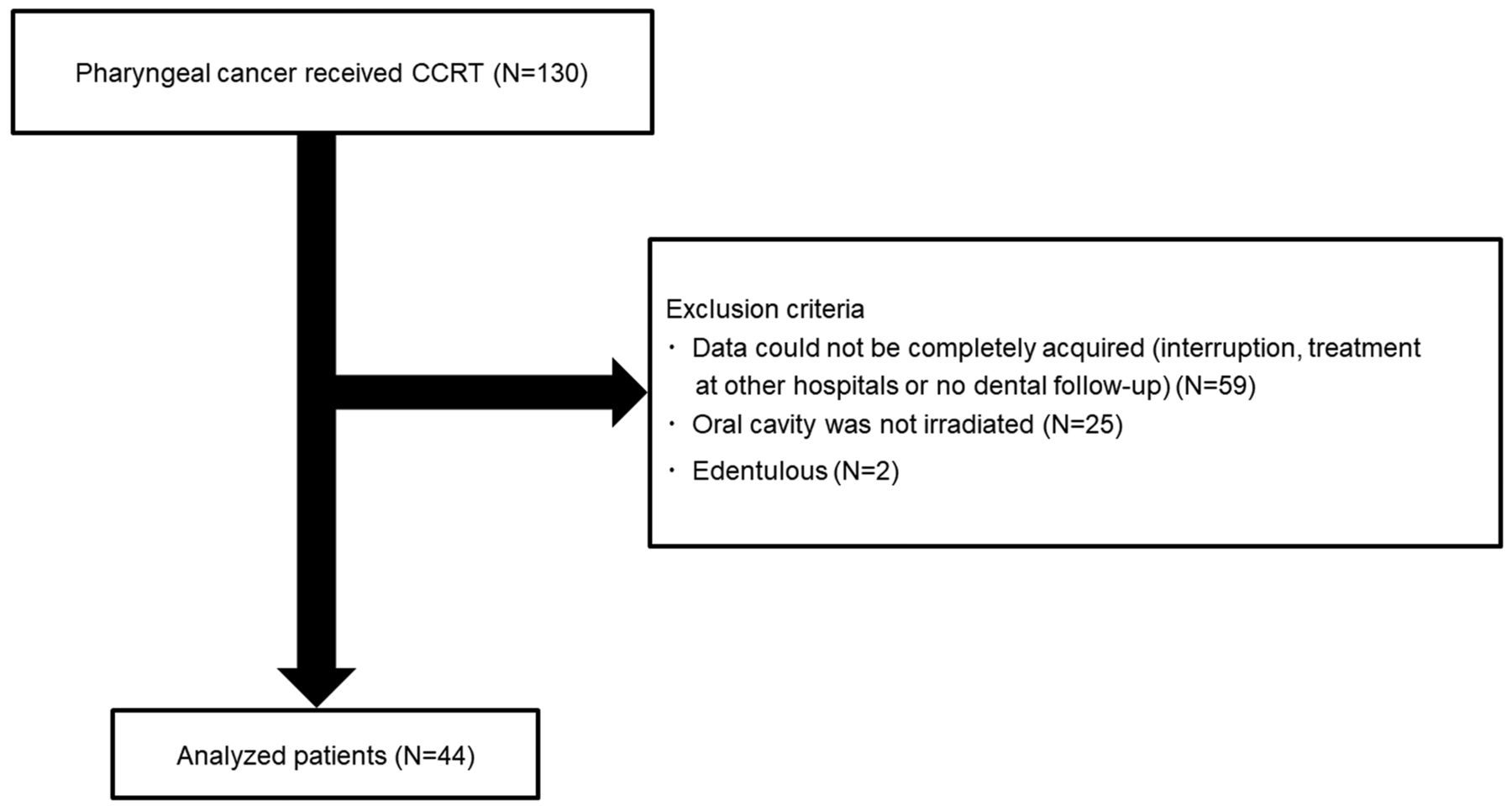
Study design and population. This was a retrospective cohort study. A total of 130 patients were diagnosed as having pharyngeal cancer at the Okayama University Hospital Head and Neck Cancer Center (Okayama, Japan) and received CCRT between April, 2013 and March, 2017. Exclusion criteria were as follows: complete data not acquired (59 patients); irradiated area did not include the oral cavity (25 patients); or edentulous patients (two patients). As a result, data from 44 patients were analyzed (Figure 1).

This study was approved by the Ethics Committee of the Okayama University Graduate School of Medicine, Dentistry and Pharmaceutical Sciences and the Okayama University Hospital (no. 1802-018). Informed consent was obtained from each participant.

General and oral conditions. The data for the general and oral conditions were collected from medical and dental records. These items were age, sex, body weight, smoking habit, drinking habit, medical history, radiation dose, anticancer agent menu, cancer stage (International Classification of Diseases for Oncology ICD-10 version 2015) (16), primary cancer site, center site of the irradiated area, incipient or recurrent cancer, number of teeth present, possible oral factors causing injury to the oral mucosa, nutrition by gastrogavage/nasoenteric, xerostomia, and amount of anti-inflammatory gargle agent used. Factors causing injury to the oral mucosa, such as malalignment and remaining tooth roots, were diagnosed by a dentist prior to cancer therapy. Furthermore, serum markers, including white blood cell (WBC) count, serum albumin, serum creatinine, aspartate aminotransferase (AST), alanine aminotransferase (ALT), and C-reactive protein (CRP), were also evaluated. The serum WBC count was determined by the electrical resistance method using an automatic analyzer (BAYER ADVIA2120; Bayer Ltd., Osaka, Japan). The serum Alb level was measured by the modified bromocresol purple method using an automatic analyzer (JEOL BM 8040 and BM 2250; Jeol Ltd., Tokyo, Japan). The serum creatinine level was measured by enzymatic methods using an automatic analyzer (JEOL BM 8040 and JCA-BM 6050; Jeol Ltd.). The serum CRP concentration was measured using the latex agglutination method using an automatic analyzer (JEOL BM 8040 and BM 2250; Jeol Ltd.).

The serum creatinine level (SCr) was converted to creatinine clearance (Ccr) in males by the Cockcroft-Gault equation (17,18), as follows: Embedded Image

For females, Ccr values thus calculated were multiplied by 0.85. Based on previous studies (19-23), a Ccr cut-off of 60 ml/min was used. Ccr of 60 mI/min or less was defined as moderate/severe RD, and Ccr of 60 mI/min or more was defined as normal/mild RD.

The scale for OM was according to the Common Terminology Criteria for Adverse Events ver. 3.0 (2006) (24) as follows: 0, None; 1, erythema of the mucosa; 2, patchy ulcerations or pseudomembranes; 3, confluent ulcerations or pseudomembranes, bleeding with minor trauma; 4, tissue necrosis, significant spontaneous bleeding, life-threatening consequences; and 5, death. Treatment plans were determined by standard protocols according to the tumor stage and physical condition of the patient.

Statistical analysis. The patients were divided into two groups according to OM: grade 0-2 (N=20) and grade 3 (N=24); there were no patients with grade 4 or 5 during the study period. The Mann–Whitney U-test and chi-squared test were used to assess significant differences in clinical variables between the two groups. The cumulative incidence of overall OM was estimated using the Kaplan–Meier method, and differences were tested using the log-rank test. The follow-up period lasted until a CCRT dose of 60 Gy was reached.

Backward stepwise regression procedures for the Cox proportional hazards model were used to determine significant prognostic factors. The variable reduction method (likelihood ratio) was adopted for the Cox proportional hazards model, and the remaining factors were re-evaluated using the forced-input method. In the Cox proportional hazards model, the following candidate variables were adjusted for covariates: Smoking habit, drinking habit, incipient cancer, cancer stage, toxicity of anticancer drug agents, number of teeth present, factor causing injury to the oral mucosa, WBC count, serum albumin concentration, center of the irradiated area, and renal dysfunction. Anticancer agents were divided into two categories according to toxicity, either liver or kidney. Values of p<0.05 were considered significant. All analyses were performed using SPSS 15.0 J for Windows (IBM Japan, Tokyo, Japan).

Results

Table I shows the comparisons of baseline variables and events in CCRT between the two OM groups, grade 0-2 and grade 3. There were no significant differences in the variables between the two groups, except for Ccr, which was significantly lower in the latter group.

Table II shows the distribution of OM during the CCRT period in the normal/mild RD and the moderate/severe RD groups. There were no significant differences in the distribution of severity between the two groups.

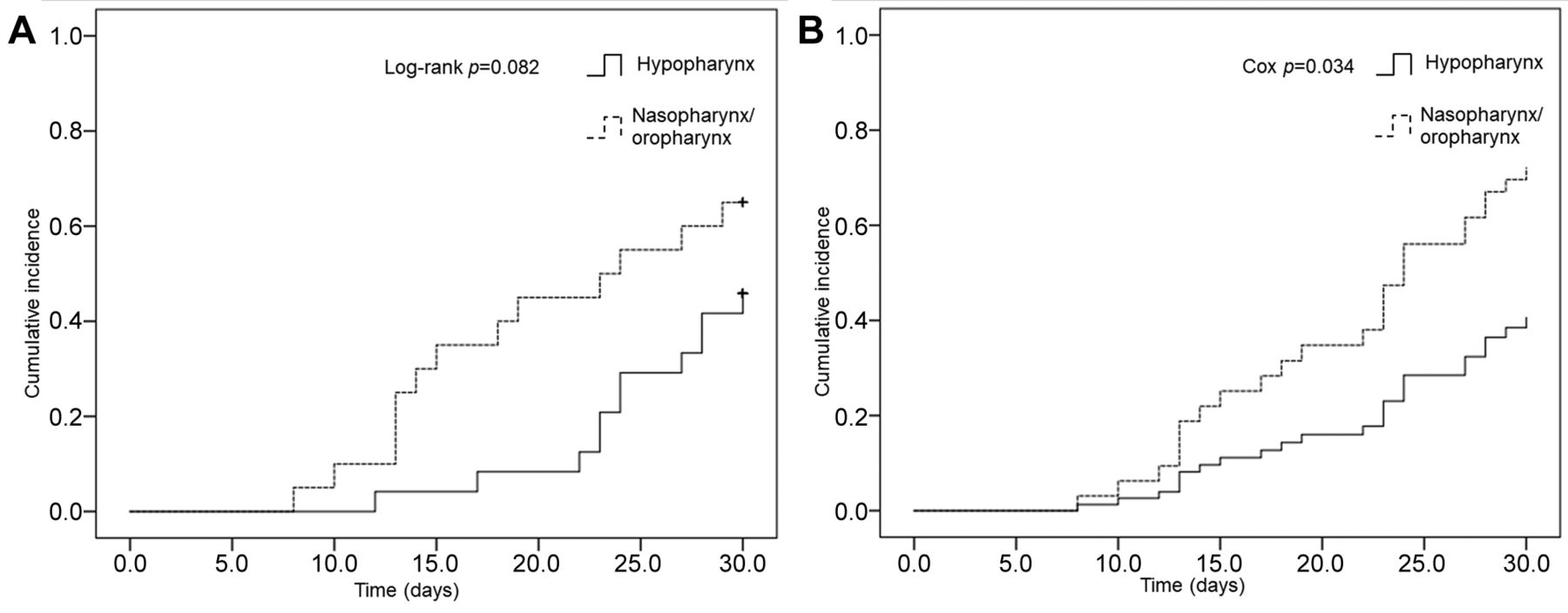
The Cox proportional hazards regression model demonstrated that the nasopharynx/oropharynx as the site of the irradiated area and RD were significantly associated with the incidence of severe OM (grade 3) (Table III). Figure 2 shows the association between RD and the overall incidence of severe OM for non-adjusted and adjusted cases. Figure 3 shows the association between the site of the irradiated area (hypopharynx vs. nasopharynx/oropharynx) and the overall incidence of severe OM for non-adjusted and adjusted cases.

Discussion

As well as type of CCRT, a variety of factors including age, nutritional status, type of malignancy, pretreatment oral condition, oral care during treatment, and pretreatment neutrophil counts can be associated with the development of OM in patients with HNC (25, 26). However, the details of the mechanism of OM development are completely unknown, and its control during CCRT remains challenging. To the best of our knowledge, this is the first longitudinal study to investigate the association between OM and RD during CCRT. The present study showed that the relative high-risk factors for severe OM (grade 3) were the nasopharynx/oropharynx as site of irradiation and RD (Table III). This may provide a new insight into OM and predict developing OM during CCRT by focusing on RD.
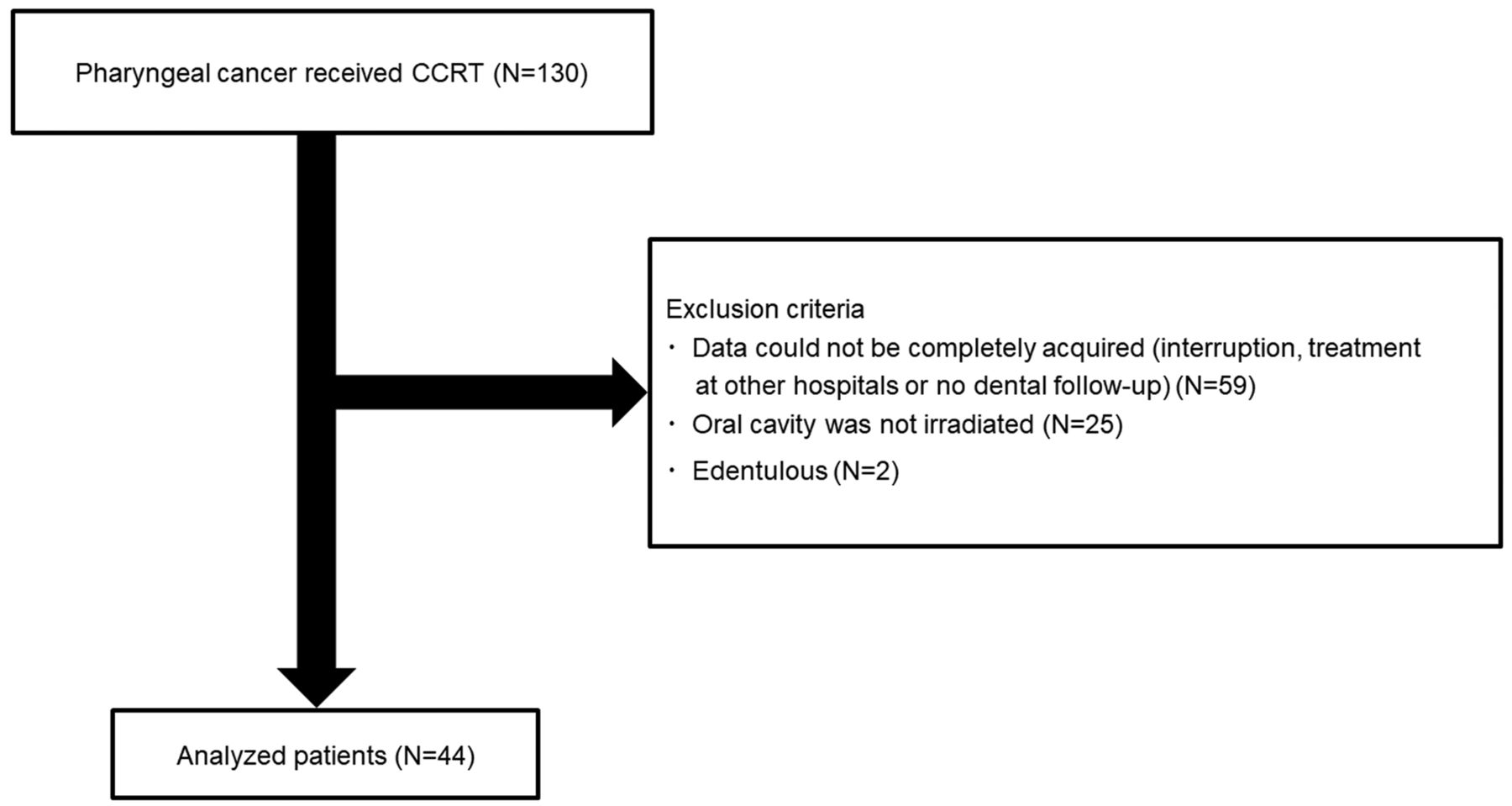
Figure 1.
  • Download figure
  • Open in new tab
  • Download powerpoint
Figure 1.

Flowchart of the study. CCRT: Concurrent chemoradiotherapy.

It was found that RD was a possible risk factor for severe OM (Table III). Since impaired renal function is associated with decreased renal clearance of drugs, it can lead to high incidences and severities of adverse events in patients taking anticancer agents (22). In CCRT, anticancer agents or molecular target drugs, including cisplatin, carboplatin, methotrexate, tegafur, and cetuximab, are widely used. One of the major side-effects of these anticancer agents is RD (14). Therefore, prescription of anticancer agents should be carefully considered in order to prevent severe OM in patients with HNC during CCRT in accordance with the estimated Ccr.

When the center of the irradiated area was the nasopharynx/oropharynx, the risk of severe OM was significantly higher than when it was the hypopharynx (Table III, Figure 3). The radiation dose is gradually attenuated from the center of the target lesion to the neighboring area (27). Since the center of the irradiated area was closer to the oral cavity when the site was the nasopharynx/oropharynx rather than the hypopharynx, it may be reasonable that severe OM developed in cases with the center site being the nasopharynx/oropharynx.

Because of intense pain, patients with grade 3-4 mucositis require feeding tubes, total parenteral nutrition, and opioid analgesics (12, 28). Therefore, clinicians should pay attention to nutritional support, oral decontamination, palliation of dry mouth, management of oral bleeding, and therapeutic interventions during the management of OM in patients treated with CCRT (29). In the present study, all patients received continuous oral hygiene care by nurses, dentists, or dental hygienists. When patients have RD and the center site of the irradiated area is the nasopharynx/oropharynx, clinicians should understand the high risk of severe OM before CCRT. Furthermore, more appropriate management of OM is needed in the future.

CCRT is one of the most commonly used cancer treatments, in which severe OM develops at a high rate. CCRT can more easily induce severe OM than radiotherapy alone. Furthermore, the risk of severe OM in radiotherapy without covering the oral cavity, such as intensity-modulated radiation therapy, may be similar to that of chemotherapy alone (27). Since the goal was to investigate more critically the risk of OM in CCRT, CCRT cases in which the irradiated area did not cover the oral cavity were excluded.

View this table:
  • View inline
  • View popup
  • Download powerpoint
Table I.

Relationships between grade of oral mucositis and other factors.

View this table:
  • View inline
  • View popup
  • Download powerpoint
Table II.

Relationship between renal dysfunction (RD) and oral mucositis (OM).

Figure 2.
  • Download figure
  • Open in new tab
  • Download powerpoint
Figure 2.

Association between renal dysfunction and overall incidence of oral mucositis (grade 3) for non-adjusted (A) and adjusted (B) cases (adjusted for covariates shown in Table III). Moderate/severe renal function: Creatinine clearance (Ccr) <60 mI/min; normal/mild renal dysfunction: Ccr≥60 mI/min.

Figure 3.
  • Download figure
  • Open in new tab
  • Download powerpoint
Figure 3.

Association between the center site of the irradiated area (hypopharynx vs. nasopharynx/oropharynx) and the overall incidence of oral mucositis (grade 3) for non-adjusted (A) and adjusted (B) cases (adjusted for covariates shown in Table III).

View this table:
  • View inline
  • View popup
  • Download powerpoint
Table III.

Cox proportional hazards model examining prognostic factors.

A previous study reported that the overall incidence of OM in CCRT was 80% (30). For severe OM (>grade 2), the incidence was about 45% in patients receiving CCRT (10, 25, 26). In the present study, the overall OM incidence was 95.5%, and severe OM was observed in 54.5% of patients (Table II). On the other hand, in patients receiving a typical course of RT (6-7 weeks), OM appears as erythema of the oral mucosa in the first 2-3 weeks of RT. In the present study, OM appeared 2-3 weeks after the start of CCRT (data not shown). Thus, the prevalence and timing of developing OM in this study were similar to other studies.

The present study had certain limitations. Firstly, all patients were recruited from the Okayama University Hospital. This may limit the application of our findings to the general population. Secondly, the number of patients was small. Further studies with a larger number of patients are required. Thirdly, this was a retrospective cohort study. Prospective cohort or intervention studies may confirm this relationship. Finally, aIthough there was adjustment for potential confounders, there may be further confounders including oral microflora or genetic factors, and the detailed mechanism relating RD and OM remains unknown.

In conclusion, this retrospective study showed that RD at baseline and nasopharynx/oropharynx as the center of the irradiated area were associated with a high risk of severe OM in patients with pharyngeal cancer those with CCRT including irradiation to the oral cavity.

Footnotes

  • This article is freely accessible online.

  • Conflicts of Interest

    The Authors declare they have no competing interests in regard to this study.

  • Received August 26, 2018.
  • Revision received September 21, 2018.
  • Accepted September 28, 2018.
  • Copyright © 2019 The Author(s). Published by the International Institute of Anticancer Research.

References

  1. ↵
    1. Hori M,
    2. Matsuda T,
    3. Shibata A,
    4. Katanoda K,
    5. Sobue T,
    6. Nishimoto H
    : Cancer incidence and incidence rates in Japan in 2009: A study of 32 population-based cancer registries for the Monitoring of Cancer Incidence in Japan (MCIJ) project. Jpn J Clin Oncol 45(9): 884-891, 2015.
    OpenUrlCrossRefPubMed
  2. ↵
    1. Al-Sarraf M,
    2. LeBlanc M,
    3. Giri PG,
    4. Fu KK,
    5. Cooper J,
    6. Vuong T,
    7. Forastiere AA,
    8. Adams G,
    9. Sakr WA,
    10. Schuller DE,
    11. Ensley JF
    : Chemoradiotherapy versus radiotherapy in patients with advanced nasopharyngeal cancer: phase III randomized Intergroup study 0099. J Clin Oncol 16(4): 1310-1317, 1998.
    OpenUrlAbstract/FREE Full Text
    1. Pignon JP,
    2. Bourhis J,
    3. Domenge C,
    4. Designé L
    : Chemotherapy added to locoregional treatment for head and neck squamous-cell carcinoma: Three meta-analyses of updated individual data. MACH-NC Collaborative Group. Meta-analysis of chemotherapy on head and neck cancer. Lancet 355(9208): 949-a55, 2000.
    OpenUrlCrossRefPubMed
  3. ↵
    1. Monnerat C,
    2. Faivre S,
    3. Temam S,
    4. Bourhis J,
    5. Raymond E
    : End points for new agents in induction chemotherapy for locally advanced head and neck cancers. Ann Oncol 13(7): 995-1006, 2002.
    OpenUrlCrossRefPubMed
  4. ↵
    1. Pfister DG,
    2. Spencer S,
    3. Brizel DM,
    4. Burtness B,
    5. Busse PM,
    6. Caudell JJ,
    7. Cmelak AJ,
    8. Colevas AD,
    9. Dunphy F,
    10. Eisele DW,
    11. Gilbert J,
    12. Gillison ML,
    13. Haddad RI,
    14. Haughey BH,
    15. Hicks WL Jr..,
    16. Hitchcock YJ,
    17. Jimeno A,
    18. Kies MS,
    19. Lydiatt WM,
    20. Maghami E,
    21. Martins R,
    22. McCaffrey T,
    23. Mell LK,
    24. Mittal BB,
    25. Pinto HA,
    26. Ridge JA,
    27. Rodriguez CP,
    28. Samant S,
    29. Schuller DE,
    30. Shah JP,
    31. Weber RS,
    32. Wolf GT,
    33. Worden F,
    34. Yom SS,
    35. McMillian NR,
    36. Hughes M,
    37. National Comprehensive Cancer Network
    . Head and neck cancers: Version 2.2014: Clinical practice guidelines in oncology. J Natl Compr Canc Netw 12(10): 1454-1487, 2014.
    OpenUrlAbstract/FREE Full Text
  5. ↵
    1. Sroussi HY,
    2. Epstein JB,
    3. Bensadoun RJ,
    4. Saunders DP,
    5. Lalla RV,
    6. Migliorati CA,
    7. Heaivilin N,
    8. Zumsteg ZS
    : Common oral complications of head and neck cancer radiation therapy: mucositis: infections: saliva change: fibrosis: sensory dysfunctions: dental caries: periodontal disease: and osteoradionecrosis. Cancer Med 6(12): 2918-2931, 2017.
    OpenUrl
  6. ↵
    1. Duncan GG,
    2. Epstein JB,
    3. Tu D,
    4. El Sayed S,
    5. Bezjak A,
    6. Ottaway J,
    7. Pater J
    : Quality of life: mucositis: and xerostomia from radiotherapy for head and neck cancers: a report from the NCIC CTG HN2 randomized trial of an antimicrobial lozenge to prevent mucositis. Head Neck 27(5): 421-428, 2005.
    OpenUrlCrossRefPubMed
  7. ↵
    1. Lalla RV,
    2. Treister N,
    3. Sollecito T,
    4. Schmidt B,
    5. Patton LL,
    6. Mohammadi K,
    7. Hodges JS,
    8. Brennan MT
    : Oral complications at 6 months after radiation therapy for head and neck cancer. Oral Dis 23(8): 1134-1143, 2017.
    OpenUrl
  8. ↵
    1. Vera-Llonch M,
    2. Oster G,
    3. Hagiwara M,
    4. Sonis S
    : Oral mucositis in patients undergoing radiation treatment for head and neck carcinoma. Cancer 106(2): 329-336, 2006.
    OpenUrlCrossRefPubMed
  9. ↵
    1. Trotti A,
    2. Bellm LA,
    3. Epstein JB,
    4. Frame D,
    5. Fuchs HJ,
    6. Gwede CK,
    7. Komaroff E,
    8. Nalysnyk L,
    9. Zilberberg MD
    : Mucositis incidence: severity and associated outcomes in patients with head and neck cancer receiving radiotherapy with or without chemotherapy: A systematic literature review. Radiother Oncol 66(3): 253-262, 2003.
    OpenUrlCrossRefPubMed
    1. Wendt TG,
    2. Grabenbauer GG,
    3. Rödel CM,
    4. Thiel HJ,
    5. Aydin H,
    6. Rohloff R,
    7. Wustrow TP,
    8. Iro H,
    9. Popella C,
    10. Schalhorn A
    : Simultaneous radiochemotherapy versus radiotherapy alone in advanced head and neck cancer: A randomized multicenter study. J Clin Oncol 16(4): 1318-1324, 1998.
    OpenUrlAbstract/FREE Full Text
  10. ↵
    1. Elting LS,
    2. Cooksley CD,
    3. Chambers MS,
    4. Garden AS
    : Risk: outcomes: and costs of radiation-induced oral mucositis among patients with head-and-neck malignancies. Int J Radiat Oncol Biol Phys 68(4): 1110-1120, 2007.
    OpenUrlCrossRefPubMed
  11. ↵
    1. Kashiwazaki H,
    2. Matsushita T,
    3. Sugita J,
    4. Shigematsu A,
    5. Kasashi K,
    6. Yamazaki Y,
    7. Kanehira T,
    8. Yamamoto S,
    9. Kondo T,
    10. Endo T,
    11. Tanaka J,
    12. Hashino S,
    13. Nishio M,
    14. Imamura M,
    15. Kitagawa Y,
    16. Inoue N
    : Professional oral health care reduces oral mucositis and febrile neutropenia in patients treated with allogeneic bone marrow transplantation. Support Care Cancer 20(2): 367-373, 2012.
    OpenUrlPubMed
  12. ↵
    1. Shankar A,
    2. Roy S,
    3. Bhandari M,
    4. Rath GK,
    5. Biswas AS,
    6. Kanodia R,
    7. Adhikari N,
    8. Sachan R
    : Current trends in management of oral mucositis in cancer treatment. Asian Pac J Cancer Prev 18(8): 2019-2026, 2017.
    OpenUrl
  13. ↵
    1. Fujita K,
    2. Masuo Y,
    3. Okumura H,
    4. Watanabe Y,
    5. Suzuki H,
    6. Sunakawa Y,
    7. Shimada K,
    8. Kawara K,
    9. Akiyama Y,
    10. Kitamura M,
    11. Kunishima M,
    12. Sasaki Y,
    13. Kato Y
    : Increased plasma concentrations of unbound SN-38: the active metabolite of irinotecan: in cancer patients with severe renal failure. Pharm Res 33(2): 269-282, 2015.
    OpenUrl
  14. ↵
    1. World Health Organization (WHO)
    . International Classification of Diseases for Oncology, ICD-10, 10th Revision. Geneva: WHO, 2015.
  15. ↵
    1. Cockcroft DW,
    2. Gault MH
    : Prediction of creatinine clearance from serum creatinine. Nephron 16(1): 31-41, 1976.
    OpenUrlCrossRefPubMed
  16. ↵
    1. Ando M,
    2. Minami H,
    3. Ando Y,
    4. Saka H,
    5. Sakai S,
    6. Yamamoto M,
    7. Sasaki Y,
    8. Shimokata K,
    9. Hasegawa Y
    : Multi-institutional validation study of carboplatin dosing formula using adjusted serum creatinine level. Clin Cancer Res 6(12): 4733-4738, 2000.
    OpenUrlAbstract/FREE Full Text
  17. ↵
    1. Dash A,
    2. Galsky MD,
    3. Vickers AJ,
    4. Serio AM,
    5. Koppie TM,
    6. Dalbagni G,
    7. Bochner BH
    : Impact of renal impairment on eligibility for adjuvant cisplatin-based chemotherapy in patients with urothelial carcinoma of the bladder. Cancer 107(3): 506-513, 2006.
    OpenUrlCrossRefPubMed
    1. Maru S,
    2. Abe T,
    3. Shinohara N,
    4. Sazawa A,
    5. Maruyama S,
    6. Harabayashi T,
    7. Suzuki S,
    8. Nonomura K
    : Influence of baseline renal function and dose reduction of nephrotoxic chemotherapeutic agents on the outcome of metastatic urothelial carcinoma: a retrospective study. Int J Urol 19(2): 110-116, 2011.
    OpenUrl
    1. Mitsuzuka K,
    2. Yamashita S,
    3. Namiki S,
    4. Yamada S,
    5. Sato K,
    6. Saito H,
    7. Kaiho Y,
    8. Ito A,
    9. Nakagawa H,
    10. Arai Y
    : Low-dose maintenance gemcitabine-carboplatin chemotherapy could be an alternative to continuous standard chemotherapy for patients with metastatic urothelial carcinoma. Int J Urol 21(11): 1114-1119, 2014.
    OpenUrl
  18. ↵
    1. Yamanaka T,
    2. Matsumoto S,
    3. Teramukai S,
    4. Ishiwata R,
    5. Nagai Y,
    6. Fukushima M
    : Analysis of risk factors for severe adverse effects of oral 5-fluorouracil S-1 in patients with advanced gastric cancer. Gastric Cancer 10(2): 129-134, 2007.
    OpenUrlCrossRefPubMed
  19. ↵
    1. Shiroyama T,
    2. Kijima T,
    3. Komuta K,
    4. Yamamoto S,
    5. Minami S,
    6. Ogata Y,
    7. Okafuji K,
    8. Imamura F,
    9. Hirashima T,
    10. Tachibana I,
    11. Kawase I,
    12. Kumanogoh A
    : Phase II tailored S-1 regimen study of first-line chemotherapy in elderly patients with advanced and recurrent non-small cell lung cancer. Cancer Chemother Pharmacol 70(6): 783-789, 2012.
    OpenUrlPubMed
  20. ↵
    1. National Cancer Institute
    . Common Terminology Criteria for Adverse Events (CTCAE) ver. 3.0. 2006, available at https://ctep.cancer.gov/protocolDevelopment/electronic_applications/docs/ctcaev3.pdf, last accessed 25/09/2018.
  21. ↵
    1. Pico JL,
    2. Avila-Garavito A,
    3. Naccache P
    , Mucositis: Its occurrence: consequences: and treatment in the oncology setting. Oncologist 3: 446-451, 1998.
    OpenUrlFREE Full Text
  22. ↵
    1. Borowski B,
    2. Benhamou E,
    3. Pico JL,
    4. Laplanche A,
    5. Margainaud JP,
    6. Hayat M
    : Prevention of oral mucositis in patients treated with high-dose chemotherapy and bone marrow transplantation: A randomised controlled trial comparing two protocols of dental care. Eur J Cancer B Oral Oncol 30B(2): 93-97, 1994.
    OpenUrlCrossRef
  23. ↵
    1. Dabaja B,
    2. Salehpour MR,
    3. Rosen I,
    4. Tung S,
    5. Morrison WH,
    6. Ang KK,
    7. Garden AS
    : Intensity-modulated radiation therapy (IMRT) of cancers of the head and neck: Comparison of split-field and whole-field techniques. Int J Radiat Oncol Biol Phys 63(4): 1000-1005, 2005.
    OpenUrlPubMed
  24. ↵
    1. Sonis ST,
    2. Elting LS,
    3. Keefe D,
    4. Peterson DE,
    5. Schubert M,
    6. Hauer-Jensen M,
    7. Bekele BN,
    8. Raber-Durlacher J,
    9. Donnelly JP,
    10. Rubenstein EB
    : Mucositis Study Section of the Multinational Association for Supportive Care in Cancer; International Society for Oral Oncology. Perspectives on cancer therapy-induced mucosal injury: Pathogenesis: measurement: epidemiology: and consequences for patients. Cancer 100: 1995-2025, 2004.
    OpenUrlCrossRefPubMed
  25. ↵
    1. Elting LS,
    2. Sonis ST,
    3. Epstein JB,
    4. Raber-Durlacher JE,
    5. Migliorati CA,
    6. McGuire DB,
    7. Hutchins RD,
    8. Peterson DE
    : Mucositis Study Section of the Multinational Association of Supportive Care in Cancer and the International Society for Oral Oncology. Updated clinical practice guidelines for the prevention and treatment of mucositis. Cancer 109(5): 820-831, 2007.
    OpenUrlCrossRefPubMed
  26. ↵
    1. Bourhis J,
    2. Sire C,
    3. Graff P,
    4. Grégoire V,
    5. Maingon P,
    6. Calais G,
    7. Gery B,
    8. Martin L,
    9. Alfonsi M,
    10. Desprez P,
    11. Pignon T,
    12. Bardet E,
    13. Rives M,
    14. Geoffrois L,
    15. Daly-Schveitzer N,
    16. Sen S,
    17. Tuchais C,
    18. Dupuis O,
    19. Guerif S,
    20. Lapeyre M,
    21. Favrel V,
    22. Hamoir M,
    23. Lusinchi A,
    24. Temam S,
    25. Pinna A,
    26. Tao YG,
    27. Blanchard P,
    28. Aupérin A
    : Concomitant chemoradiotherapy versus acceleration of radiotherapy with or without concomitant chemotherapy in locally advanced head and neck carcinoma (GORTEC 99-02): An open-label phase 3 randomised trial. Lancet Oncol 13(2): 145-153, 2012.
    OpenUrlCrossRefPubMed
PreviousNext
Back to top

In this issue

In Vivo
Vol. 33, Issue 1
January-February 2019
  • Table of Contents
  • Table of Contents (PDF)
  • Index by author
  • Back Matter (PDF)
  • Ed Board (PDF)
  • Front Matter (PDF)
Print
Download PDF
Article Alerts
Sign In to Email Alerts with your Email Address
Email Article

Thank you for your interest in spreading the word on In Vivo.

NOTE: We only request your email address so that the person you are recommending the page to knows that you wanted them to see it, and that it is not junk mail. We do not capture any email address.

Enter multiple addresses on separate lines or separate them with commas.
Relationship Between Renal Dysfunction and Oral Mucositis in Patients Undergoing Concurrent Chemoradiotherapy for Pharyngeal Cancer: A Retrospective Cohort Study
(Your Name) has sent you a message from In Vivo
(Your Name) thought you would like to see the In Vivo web site.
CAPTCHA
This question is for testing whether or not you are a human visitor and to prevent automated spam submissions.
4 + 12 =
Solve this simple math problem and enter the result. E.g. for 1+3, enter 4.
Citation Tools
Relationship Between Renal Dysfunction and Oral Mucositis in Patients Undergoing Concurrent Chemoradiotherapy for Pharyngeal Cancer: A Retrospective Cohort Study
HIROFUMI MIZUNO, HISATAKA MIYAI, AYA YOKOI, TERUMASA KOBAYASHI, CHIAKI INABU, TAKAYUKI MARUYAMA, DAISUKE EKUNI, NOBUYOSHI MIZUKAWA, SHIN KARIYA, KAZUNORI NISHIZAKI, YOSHIHIRO KIMATA, MANABU MORITA
In Vivo Jan 2019, 33 (1) 183-189; DOI: 10.21873/invivo.11457

Citation Manager Formats

  • BibTeX
  • Bookends
  • EasyBib
  • EndNote (tagged)
  • EndNote 8 (xml)
  • Medlars
  • Mendeley
  • Papers
  • RefWorks Tagged
  • Ref Manager
  • RIS
  • Zotero
Reprints and Permissions
Share
Relationship Between Renal Dysfunction and Oral Mucositis in Patients Undergoing Concurrent Chemoradiotherapy for Pharyngeal Cancer: A Retrospective Cohort Study
HIROFUMI MIZUNO, HISATAKA MIYAI, AYA YOKOI, TERUMASA KOBAYASHI, CHIAKI INABU, TAKAYUKI MARUYAMA, DAISUKE EKUNI, NOBUYOSHI MIZUKAWA, SHIN KARIYA, KAZUNORI NISHIZAKI, YOSHIHIRO KIMATA, MANABU MORITA
In Vivo Jan 2019, 33 (1) 183-189; DOI: 10.21873/invivo.11457
Twitter logo Facebook logo Mendeley logo
  • Tweet Widget
  • Facebook Like
  • Google Plus One

Jump to section

  • Article
    • Abstract
    • Patients and Methods
    • Results
    • Discussion
    • Footnotes
    • References
  • Figures & Data
  • Info & Metrics
  • PDF

Related Articles

Cited By...

  • No citing articles found.
  • Google Scholar

More in this TOC Section

  • Retzius-sparing Retroperitoneal Laparoscopic Radical Prostatectomy (RSR-LRP): A Novel Technique With Favorable Functional and Oncological Outcomes – A Single-surgeon Experience of 186 Consecutive Cases
  • Symptom Burden in Adenomyosis: A Comparative Analysis With Peritoneal and Deep Infiltrating Endometriosis
  • Impact of Donor Cirrhosis Outcome Risk Estimator (CORE) Score on Recipient Outcomes Following Living-donor Liver Transplantation
Show more Clinical Studies

Keywords

  • head and neck cancer
  • Oral mucositis
  • concurrent chemoradiotherapy
  • renal dysfunction
  • creatinine clearance
In Vivo

© 2026 In Vivo

Powered by HighWire