Main menu

  • Home
  • Current Issue
  • Archive
  • Info for
    • Authors
    • Editorial Policies
    • Advertisers
    • Editorial Board
    • Special Issues
  • Journal Metrics
  • Other Publications
    • Anticancer Research
    • Cancer Genomics & Proteomics
    • Cancer Diagnosis & Prognosis
  • More
    • IIAR
    • Conferences
  • About Us
    • General Policy
    • Contact
  • Other Publications
    • In Vivo
    • Anticancer Research
    • Cancer Genomics & Proteomics

User menu

  • Register
  • Subscribe
  • My alerts
  • Log in
  • My Cart

Search

  • Advanced search
In Vivo
  • Other Publications
    • In Vivo
    • Anticancer Research
    • Cancer Genomics & Proteomics
  • Register
  • Subscribe
  • My alerts
  • Log in
  • My Cart
In Vivo

Advanced Search

  • Home
  • Current Issue
  • Archive
  • Info for
    • Authors
    • Editorial Policies
    • Advertisers
    • Editorial Board
    • Special Issues
  • Journal Metrics
  • Other Publications
    • Anticancer Research
    • Cancer Genomics & Proteomics
    • Cancer Diagnosis & Prognosis
  • More
    • IIAR
    • Conferences
  • About Us
    • General Policy
    • Contact
  • Visit iiar on Facebook
  • Follow us on Linkedin
Research ArticleClinical Studies

Urinary Neopterin Concentrations During Combination Therapy with Cetuximab in Previously Treated Patients with Metastatic Colorectal Carcinoma

BOHUSLAV MELICHAR, HANA KALÁBOVÁ, LENKA KUJOVSKÁ KRČMOVÁ, SACHIN VIPIN TRIVEDI, PAVLÍNA KRÁLÍČKOVÁ, EVA MALÍŘOVÁ, MIROSLAV PECKA, HANA ŠTUDENTOVÁ, MICHAELA ZEZULOVÁ, PETRA HOLEČKOVÁ and DAGMAR SOLICHOVÁ
In Vivo September 2014, 28 (5) 953-959;
BOHUSLAV MELICHAR
1Department of Oncology, Palacký University Medical School & Teaching Hospital, Olomouc, Czech Republic
2Department of Oncology & Radiotherapy, Charles University Medical School & Teaching Hospital, Hradec Králové, Czech Republic
6Fourth Department of Medicine, Charles University Medical School & Teaching Hospital, Hradec Králové, Czech Republic
  • Find this author on Google Scholar
  • Find this author on PubMed
  • Search for this author on this site
  • For correspondence: bohuslav.melichar{at}fnol.cz
HANA KALÁBOVÁ
1Department of Oncology, Palacký University Medical School & Teaching Hospital, Olomouc, Czech Republic
  • Find this author on Google Scholar
  • Find this author on PubMed
  • Search for this author on this site
LENKA KUJOVSKÁ KRČMOVÁ
3Third Department of Medicine, Charles University Medical School & Teaching Hospital, Hradec Králové, Czech Republic
7Department of Analytical Chemistry, Charles University School of Pharmacy, Hradec Králové, Czech Republic
  • Find this author on Google Scholar
  • Find this author on PubMed
  • Search for this author on this site
SACHIN VIPIN TRIVEDI
2Department of Oncology & Radiotherapy, Charles University Medical School & Teaching Hospital, Hradec Králové, Czech Republic
  • Find this author on Google Scholar
  • Find this author on PubMed
  • Search for this author on this site
PAVLÍNA KRÁLÍČKOVÁ
4Institute of Clinical Immunology and Allergy, Charles University Medical School & Teaching Hospital, Hradec Králové, Czech Republic
  • Find this author on Google Scholar
  • Find this author on PubMed
  • Search for this author on this site
EVA MALÍŘOVÁ
5Department of Nuclear Medicine, Charles University Medical School & Teaching Hospital, Hradec Králové, Czech Republic
  • Find this author on Google Scholar
  • Find this author on PubMed
  • Search for this author on this site
MIROSLAV PECKA
6Fourth Department of Medicine, Charles University Medical School & Teaching Hospital, Hradec Králové, Czech Republic
  • Find this author on Google Scholar
  • Find this author on PubMed
  • Search for this author on this site
HANA ŠTUDENTOVÁ
1Department of Oncology, Palacký University Medical School & Teaching Hospital, Olomouc, Czech Republic
  • Find this author on Google Scholar
  • Find this author on PubMed
  • Search for this author on this site
MICHAELA ZEZULOVÁ
1Department of Oncology, Palacký University Medical School & Teaching Hospital, Olomouc, Czech Republic
  • Find this author on Google Scholar
  • Find this author on PubMed
  • Search for this author on this site
PETRA HOLEČKOVÁ
2Department of Oncology & Radiotherapy, Charles University Medical School & Teaching Hospital, Hradec Králové, Czech Republic
  • Find this author on Google Scholar
  • Find this author on PubMed
  • Search for this author on this site
DAGMAR SOLICHOVÁ
3Third Department of Medicine, Charles University Medical School & Teaching Hospital, Hradec Králové, Czech Republic
  • Find this author on Google Scholar
  • Find this author on PubMed
  • Search for this author on this site
  • Article
  • Figures & Data
  • Info & Metrics
  • PDF
Loading

Abstract

Background/Aim: Increased concentrations of neopterin, a biomarker of systemic immune response, have been reported after administration of cytokines, cytotoxic chemotherapy or external-beam radiation, but little is known about the effects of targeted-agents on neopterin. Patients and Methods: Urinary neopterin was studied in pre-treated patients with metastatic colorectal carcinoma during therapy with cetuximab, administered mostly in combination with irinotecan, 5-fluorouracil and leucovorin. Urinary neopterin was determined by high-performance liquid chromatography. Results: High initial urinary neopterin concentrations predicted poor prognosis. A significant correlation was observed between urinary neopterin and peripheral blood leukocyte count, hemoglobin and carcinoembryonic antigen concentrations. Urinary neopterin concentrations significantly increased during therapy only in patients with initially low neopterin concentrations. Conclusion: Urinary neopterin concentrations predict prognosis in patients with metastatic colorectal carcinoma treated with cetuximab. Rising neopterin concentrations indicate an activation of systemic immune response that could be responsible for the antitumor activity of cetuximab.

  • Cetuximab
  • colorectal carcinoma
  • neopterin

The advent of targeted-agents has changed the landscape of medical oncology, resulting in significant improvement of survival of patients with a wide range of malignant disorders, including the most common types of cancer, such as breast carcinoma or colorectal carcinoma. Targeted-agents are, in general, less toxic and better-tolerated than conventional cytotoxic agents. Targeted-agents are thought to exert their antitumor activity through inhibition of a defined pathway(s) involved in cancer progression or metastasis (1). Most targeted-drugs may inhibit tumor growth through more than one mechanism acting on multiple molecular targets. Importantly, evidence is accumulating indicating that many targeted-agents may also activate the immune response.

Cetuximab is a chimeric antibody against epidermal growth factor receptor used in the therapy of advanced colorectal carcinoma. In prospective clinical trials, cetuximab has demonstrated significant clinical activity in patients with irinotecan-refractory metastatic colorectal carcinoma when administered as monotherapy or in combination with irinotecan (2, 3). Activity has also been demonstrated for cetuximab in combination with chemotherapy as first-line treatment of metastatic colorectal carcinoma in patients with tumors not harboring retrovirus-associated DNA sequences (RAS) mutations (4, 5). The precise mechanism of the antitumor activity of cetuximab is currently unknown. Among potential mechanisms, activation of the host immune response has also been implicated (6, 7).

Although biomarkers play an increasingly important role in the management of patients with cancer, the utilization of biomarkers associated with host response to neoplasia has so far been limited (8). The presence of systemic inflammatory or immune response may be studied by measuring circulating cytokine concentrations. A significant problem with this approach is posed by marked fluctuations of systemic cytokine levels. Neopterin is a pteridine produced from guanosine triphosphate (GTP) by activated macrophages in a reaction catalyzed by the enzyme GTP cyclohydrolase I. The activity of GTP cyclohydrolase I is induced by interferon-γ (IFN-γ) that is produced by T-lymphocytes and natural killer cells. Thus, the production of IFN-γ reflects systemic immune activation. Because the production of IFN-γ is enhanced by pro-inflammatory cytokines, such as interleukin-1 or interleukin-6, systemic concentrations of neopterin accompany both systemic immune and inflammatory responses (9). Neopterin in serum or in urine has been validated as a biomarker of systemic immune and inflammatory responses in disorders ranging from cancer to viral infections, transplant rejection, and atherosclerosis or its complications (9-14). The use of urine for neopterin measurements may help circumvent the need for repeated venipuncture. In addition, neopterin is stable in refrigerated samples for up to two weeks, and samples for repeat assessment may be collected and stored by the patient between regular office visits. Urinary neopterin concentrations are relatively stable in patients with cancer in the absence of complications (12). The presence of increased neopterin concentrations in serum or urine has been amply documented in patients with cancer (13, 14). Moreover, an increase of urinary neopterin concentrations has been demonstrated during administration of different anticancer therapies including cytokines (13), cytotoxic drugs (15) and external beam radiation (16), but little is known about systemic immune activation, reflected in urinary neopterin levels, during targeted therapy.

In the present study, we evaluated daily urinary neopterin concentrations in patients during therapy with cetuximab, administered to the majority of patients in combination with irinotecan-based chemotherapy.

Patients and Methods

Forty-five consecutive patients with metastatic colorectal carcinoma, 28 males and 17 females, aged (mean±standard deviation) 60±11 (range=32–78) years were included in the study. Forty-three patients were treated with the combination of cetuximab (loading dose 400 mg/m2, subsequently 250 mg/m2 weekly) followed by irinotecan (180 mg/m2), leucovorin (200 mg/m2), and 5-fluorouracil (400 mg/m2 bolus and 1200 mg/m2 for 46 hours) every two weeks (17) (including one patient who received a modification of this regimen). One patient with hyperbilirubinemia was treated with the above regimen omitting irinotecan, and one patient with cetuximab monotherapy. All patients had been previously treated with oxaliplatin, and all but one patient had been pre-treated with an irinotecan-containing regimen. The investigations were part of a project approved by the Institutional Ethical Committee (file number 200504 S14P), and the patients signed informed consent. For all patients, neopterin determination was performed in urine samples collected before therapy. Preliminary results on prognosis in the first 21 patients of this cohort have already been reported (18).

Urinary neopterin was determined as described elsewhere (19). Briefly, urine sample were collected and stored at −20°C until analysis. After centrifugation (5 min, 1300 × g) and diluting 100 μl of urine specimens with 1.0 ml of mobile phase containing 2 g of disodium-EDTA per liter, samples were injected onto a column, and neopterin was determined using high-performance liquid chromatography system Prominence LC20 (Shimadzu, Kyoto, Japan). Neopterin was identified by its native fluorescence (353 nm excitation, 438 nm emission) and quantified by external standard method. Creatinine was determined by Jaffé reaction after dilution of the sample 1:50 on a Modular analyzer (Roche, Basel, Switzerland) using a commercial kit according the manufacturer's instructions, and neopterin concentrations were expressed as neopterin/creatinine ratio (μmol/mol creatinine).

Hemoglobin was measured by a photometric method using sodium lauryl sulfate, leukocytes and platelets were determined by impedance method using a Sysmex XE-2100 blood analyzer (Sysmex, Kobe, Japan). Serum carcinoembryonic antigen (CEA) was determined by radioimmunoassay using a commercial kit (Immunotech, Prague, Czech Republic), as described elsewhere (19).

Differences during therapy were evaluated using the Wilcoxon paired test. Correlations were examined using Spearman's rank correlation coefficient. Survival was analyzed using the Kaplan–Meier method, and differences were evaluated by log-rank test. The decision on statistical significance was based on p=0.05 level. The analyses were performed using NCSS software (Number Cruncher Statistical Systems, Kaysville, UT, USA).

Results

The mean (±standard deviation) of urinary neopterin at baseline was 272±225 μmol/mol creatinine. A significant correlation was observed between urinary neopterin and hemoglobin concentrations (rs=−0.34; p<0.05; Figure 1A), peripheral blood leukocyte count (rs=0.38; p<0.05; Figure 1B) and CEA concentrations (rs=0.33; p<0.05; Figure 1C). Seventeen patients had urinary neopterin ≥214 μmol/mol creatinine (defined as upper limit of normal in an earlier study) (19). At the time of the analysis, 44 patients had died and one patient was alive after 74 months. Survival of patients with urinary neopterin concentration ≥214 μmol/mol creatinine was significantly inferior compared to patients with initial urinary neopterin <214 μmol/mol creatinine (median 10.1 vs. 17.7 months, p<0.05; Figure 2).

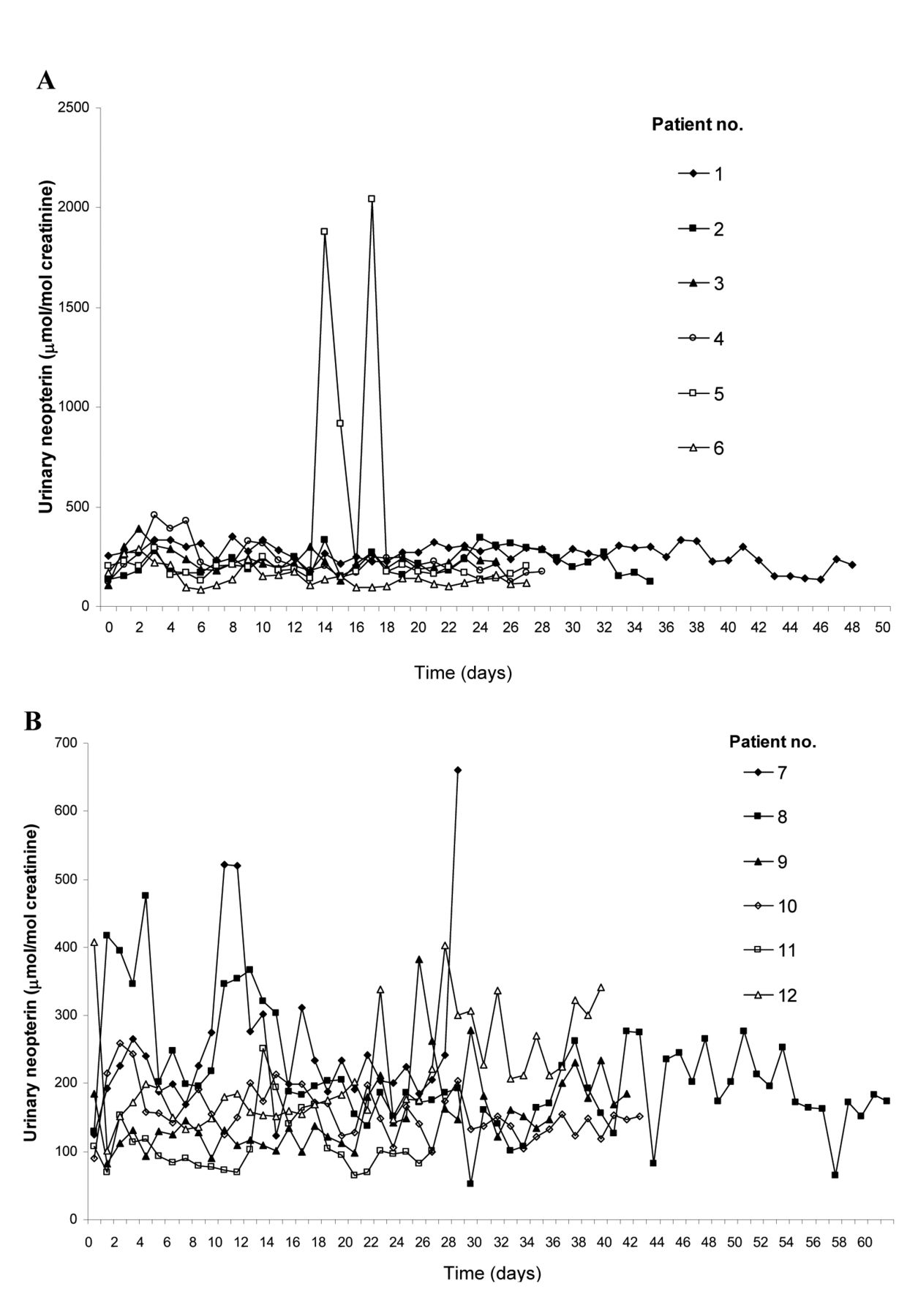
Daily neopterin measurements were obtained from 36 patients (Figure 3). The mean number of measurements obtained was 24±17 (range=1-63). Two fundamental patterns of urinary neopterin were evident based on initial neopterin concentrations. In patients with pre-treatment urinary neopterin ≥214 μmol/mol creatinine, a stable or decreasing pattern of urinary neopterin concentrations was usually observed. In contrast, urinary neopterin increased significantly in patients with initial neopterin <214 μmol/mol creatinine (Table I). In the patient treated with single-agent cetuximab, a rise of urinary neopterin concentrations was observed despite initially elevated neopterin concentrations (Figure 4).

Discussion

In addition to the prognostic significance of increased urinary neopterin concentrations, the present data demonstrate differential expression of neopterin during therapy with cetuximab combined with chemotherapy. A significant increase was observed in patients with pre-treatment neopterin concentrations in the normal range, while a decreasing trend was evident in patients with initially high urinary neopterin. Thus, the present findings indicate the presence of systemic immune activation during therapy with cetuximab. Only one patient in the present cohort was treated with single-agent cetuximab, hence it is difficult to discern the effects of irinotecan-based chemotherapy and administration of cetuximab.
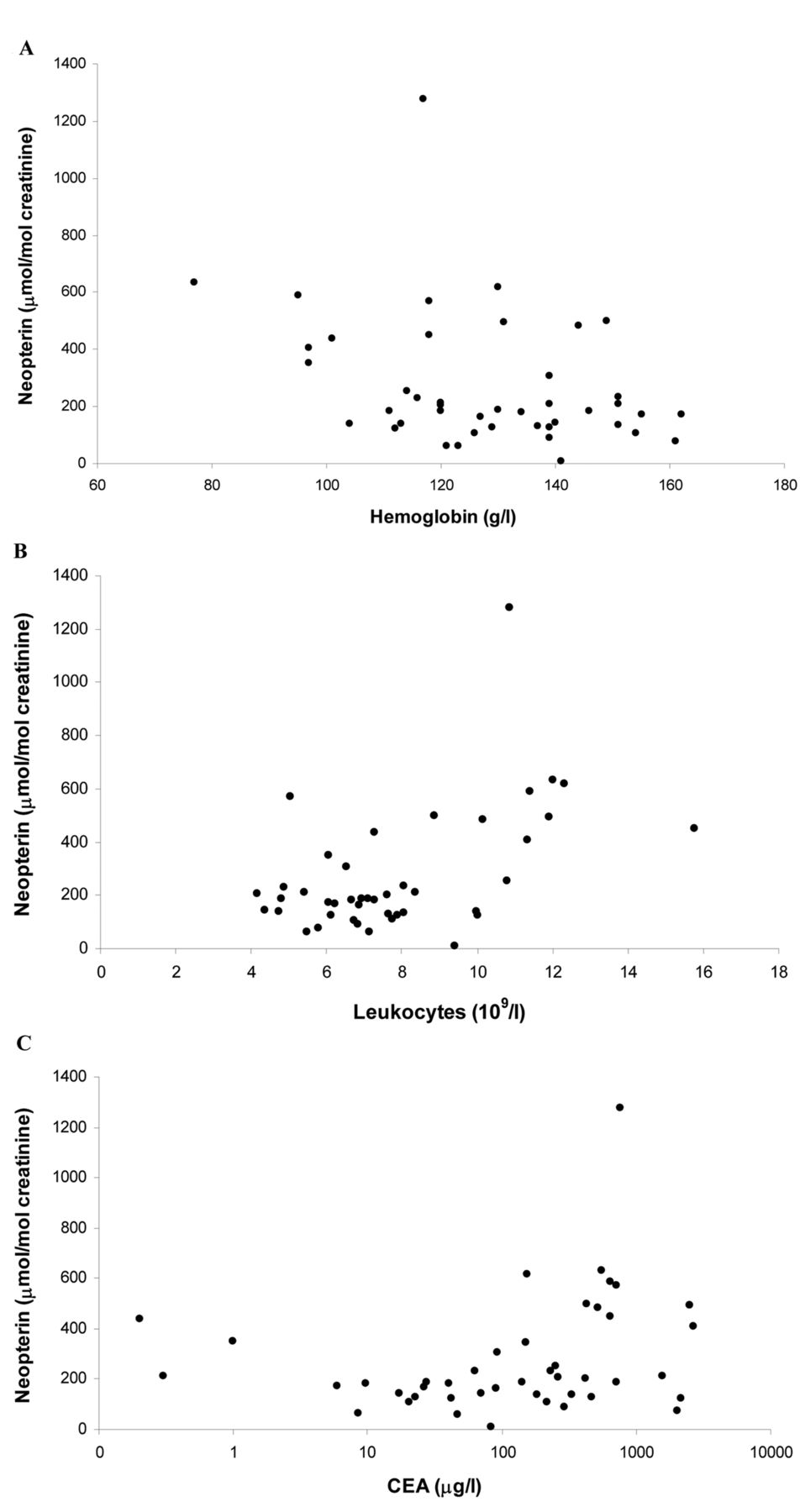
Figure 1.
  • Download figure
  • Open in new tab
  • Download powerpoint
Figure 1.

Correlation between urinary neopterin concentrations and hemoglobin. (rs=−0.34; p<0.05) (A), peripheral blood leukocyte count (rs=0.38; p<0.05) (B) and serum carcinoembryonic antigen (CEA) (rs=0.33; p<0.05) (C).

Figure 2.
  • Download figure
  • Open in new tab
  • Download powerpoint
Figure 2.

Survival of patients based on initial urinary neopterin concentration. Kaplan–Meier survival curves of patients with initial urinary neopterin concentration ≥214 μmol/mol creatinine (dashed line) and <214 μmol/mol creatinine (bold line) are shown. Median survival was 10.1 versus 17.7 months for patients with urinary neopterin concentrations ≥214 μmol/mol creatinine and <214 μmol/mol creatinine, respectively (log-rank test, p<0.05).

View this table:
  • View inline
  • View popup
  • Download powerpoint
Table I.

Urinary neopterin concentrations during the course of therapy.

Although an increase of urinary neopterin concentrations in cancer patients has been well-documented and a therapy-induced rise has been described after the administration of chemotherapy or cytokines (13, 14, 20), so far there exist limited information about neopterin in patients treated with targeted agents, including monoclonal antibodies. Among patients with non-neoplastic disorders, daily neopterin measurements were reported in organ transplant recipients, and a rise in urinary neopterin was an early indicator of acute complications (9). Similarly, daily monitoring of urinary neopterin was performed in patients with cancer, and an increase in neopterin concentration preceded complications, while a decrease in urinary neopterin was associated with tumor control (12). An increase of neopterin production has been documented after systemic administration of different cytokines (13), and cytotoxic agents (15, 20).

In patients with tumors across the spectrum of primary locations, including colorectal carcinoma, increased serum or urinary neopterin concentrations were associated with poor prognosis (13, 14, 19, 21). The present study extends observation of the negative prognostic significance of increased urinary neopterin concentrations previously reported in patients with metastatic colorectal carcinoma (19) to patients treated in second or higher lines of therapy with the combination of chemotherapy and cetuximab. It remains to be tested whether the negative prognostic significance of high urinary neopterin concentrations observed in the present cohort is associated with the absence of systemic immune response reflected by a lack of an increase of urinary neopterin concentration.

Figure 3.
  • Download figure
  • Open in new tab
  • Download powerpoint
Figure 3.

Urinary neopterin concentrations during the course of therapy. A: Patients 1-6. The course of urinary neopterin concentrations during the course of therapy in patients 1-6 is shown. The marked peaks of urinary neopterin concentration in patient 5 occurred immediately after the start of the second cycle of the combination of cetuximab, irinotecan, 5-fluorouracil and leucovorin. B: Patients 7-12.

Figure 4.
  • Download figure
  • Open in new tab
  • Download powerpoint
Figure 4.

Urinary neopterin concentrations during the course of therapy in a 78-year-old patient treated with single-agent cetuximab.

A significant correlation was observed between urinary neopterin and peripheral blood leukocyte count, hemoglobin, and CEA concentration. These correlations may partly explain the association between high urinary neopterin concentrations and poor prognosis in the present cohort of patients. Similarly to prior reports, neopterin concentrations correlated with peripheral blood cell counts. In particular, the inverse correlation of hemoglobin with neopterin concentrations has been studied extensively (22-24). Correlation of urinary neopterin with peripheral blood leukocyte count and CEA concentrations has also been reported (19). In earlier studies, associations were also observed between lower numbers or impaired function of lymphocytes or dendritic cells and increased neopterin concentration (25-28). Thus, increased neopterin concentrations are thought to reflect immune dysregulation (13), similarly to other indicators of systemic immune or inflammatory activity, e.g. C-reactive protein.

The mechanism of action of many targeted-agents may involve, at least partly, the activation of the immune response. Cetuximab is an immunoglobulin G1 class antibody that could trigger antibody-dependent cell-mediated cytotoxicity (6), and there are data indicating that, indeed, the activation of host response may be one of the mechanisms responsible for antitumor activity of cetuximab (7, 29). The increase of urinary neopterin observed in the present study further supports the notion that the activation of host response may represent one of the mechanisms behind the antitumor activity of cetuximab alone or in combination with cytotoxic chemotherapy. An acute rise of the parameters of immune or inflammatory response may have different implications and reflect an association with effective host response resulting in tumor control. On the other hand, increased neopterin concentrations before the start of therapy may indicate the presence of a state refractory to further stimulation of the immune system.

In conclusion, urinary neopterin is a prognostic biomarker in patients treated with cetuximab in second or higher lines of treatment for metastatic disease. Urinary neopterin correlates with peripheral blood leukocyte count, hemoglobin and CEA concentrations. A marked increase of urinary neopterin observed during treatment may indicate an activation of the immune response.

Acknowledgements

Supported by the Research Project Biomedreg CZ.1.05/2.1.00/01.0030.

  • Received April 1, 2014.
  • Revision received June 16, 2014.
  • Accepted June 17, 2014.
  • Copyright © 2014 The Author(s). Published by the International Institute of Anticancer Research.

References

  1. ↵
    1. Hanahan D,
    2. Weinberg RA
    : Hallmarks of cancer: the next generation. Cell 144: 646-674, 2011.
    OpenUrlCrossRefPubMed
  2. ↵
    1. Cunningham D,
    2. Hurnblet Y,
    3. Siena S,
    4. Khayat D,
    5. Bleiberg H,
    6. Santoro A,
    7. Bets D,
    8. Mueser M,
    9. Harstrick A,
    10. Verslype C,
    11. Chau I,
    12. Van Cutsem E
    : Cetuximab monotherapy and cetuximab plus irinotecan in irinotecan-refractory metastatic colorectal cancer. N Engl J Med 351: 337-345, 2004.
    OpenUrlCrossRefPubMed
  3. ↵
    1. Jonker DJ,
    2. O Callaghan CJ,
    3. Karapetis C,
    4. Zalcberg JR,
    5. Tu D,
    6. Au HJ,
    7. Berry SR,
    8. Krahn M,
    9. Price T,
    10. Simes RJ,
    11. Tebbutt NC,
    12. van Hazel G,
    13. Wierzbicki R,
    14. Langer C,
    15. Moore MJ
    : Cetuximab for the treatment of colorectal cancer. N Engl J Med 357: 2040-2048, 2007.
    OpenUrlCrossRefPubMed
  4. ↵
    1. Bokemeyer C,
    2. Bondarenko I,
    3. Makhson A,
    4. Hartmann JT,
    5. Aparicio J,
    6. de Braud F,
    7. Donea S,
    8. Ludwig H,
    9. Schuch G,
    10. Stroh G,
    11. Loos AH,
    12. Zubel A,
    13. Koralewski P
    : Fluorouracil, leucovorin, and oxaliplatin with and without cetuximab in the first-line treatment of metastatic colorectal cancer. J Clin Oncol 27: 663-671, 2009.
    OpenUrlAbstract/FREE Full Text
  5. ↵
    1. Van Cutsem E,
    2. Kohne CH,
    3. Hitre E,
    4. Zaluski J,
    5. Chien CRC,
    6. Makhson A,
    7. D Haens G,
    8. Pinter T,
    9. Lim R,
    10. Bodoky G,
    11. Roh JK,
    12. Folprecht G,
    13. Ruff P,
    14. Stroh C,
    15. Tejpar S,
    16. Schlichting M,
    17. Nippgen J,
    18. Rougier P
    : Cetuximab and chemotherapy as initial treatment for metastatic colrectal cancer. N Engl J Med 360: 1408-1417, 2009.
    OpenUrlCrossRefPubMed
  6. ↵
    1. Messersmith WA,
    2. Hidalgo M
    : Panitumumab, a monoclonal anti-epidermal growth factor receptor antibody in colorectal cancer: Another one or the one? Clin Cancer Res 13: 4664-4666, 2007.
    OpenUrlFREE Full Text
  7. ↵
    1. Zhang W,
    2. Gordon M,
    3. Schultheis AM,
    4. Yang DY,
    5. Nagashima F,
    6. Azuma M,
    7. Chang HM,
    8. Borucka E,
    9. Lurje G,
    10. Sherrod AE,
    11. Iqbal S,
    12. Groshen S,
    13. Lenz HJ
    : ECGR2A and FCGR3A polymorphisms associated with clinical outcome of epidermal growth factor receptor-expressing metastatic colorectal cancer patients treated with single-agent cetuximab. J Clin Oncol 25: 3712-3718, 2007.
    OpenUrlAbstract/FREE Full Text
  8. ↵
    1. Melichar B
    : Laboratory medicine and medical oncology: the tale of two Cinderellas. Clin Chem Lab Med 51: 99-112, 2013.
    OpenUrlPubMed
  9. ↵
    1. Wachter H,
    2. Fuchs D,
    3. Hausen A,
    4. Reibnegger G,
    5. Werner ER
    : Neopterin as marker for activation of cellular immunity: immunologic basis and clinical application. Adv Clin Chem 27: 81-141, 1989.
    OpenUrlPubMed
    1. Fuchs D,
    2. Hausen A,
    3. Reibnegger G,
    4. Werner ER,
    5. Dierich MP,
    6. Wachter H
    : Neopterin as a marker for activated cell mediated immunity: application in HIV infection. Immunol Today 9: 150-155, 1988.
    OpenUrlCrossRefPubMed
    1. Melichar B,
    2. Gregor J,
    3. Solichova D,
    4. Lukes J,
    5. Tichy M,
    6. Pidrman V
    : Increased urinary neopterin in acute myocardial infarction. Clin Chem 40: 338-339, 1994.
    OpenUrlFREE Full Text
  10. ↵
    1. Melichar B,
    2. Kalabova H,
    3. Urbanek L,
    4. Malirova E,
    5. Solichova D
    : Serial urinary neopterin measurements reflect the disease course in patients with epithelial ovarian carcinoma treated with paclitaxel/platinum. Pteridines 18: 1-7, 2007.
    OpenUrl
  11. ↵
    1. Melichar B,
    2. Solichová D,
    3. Freedman RS
    : Neopterin as an indicator of immune activation and prognosis in patients with gynecological malignancies. Int J Gynecol Cancer 16: 240-252, 2006.
    OpenUrlCrossRefPubMed
  12. ↵
    1. Reibnegger G,
    2. Fuchs D,
    3. Fuith LC,
    4. Hausen A,
    5. Werner ER,
    6. Werner-Felmayer G,
    7. Wachter H
    : Neopterin as a marker for activated cell-mediated immunity: application in malignant disease. Cancer Detect Prev 15: 483-490, 1991.
    OpenUrlPubMed
  13. ↵
    1. Melichar B,
    2. Solichova D,
    3. Melicharova K,
    4. Cermanova M,
    5. Urminska H,
    6. Ryska A
    : Systemic immune activation, anemia and thrombocytosis in breast cancer patients treated by doxorubicin and paclitaxel. Pteridines 17: 107-114, 2006.
    OpenUrl
  14. ↵
    1. Holeckova P,
    2. Krcmova L,
    3. Letal J,
    4. Svobodnik A,
    5. Kalabova H,
    6. Kasparova M,
    7. Plisek J,
    8. Pala M,
    9. Vitek P,
    10. Solichova D,
    11. Zezulova M,
    12. Studentova H,
    13. Dolezel M,
    14. Melichar B
    : Urinary neopterin concentration and toxicity of radiotherapy in patients with head and neck carcinoma during external beam radiation. Anticancer Res 33: 4097-4101, 2013.
    OpenUrlAbstract/FREE Full Text
  15. ↵
    1. Melichar B,
    2. Nemcová I
    : Eye complications of cetuximab therapy. Eur J Cancer Care 16: 439-443, 2007.
    OpenUrl
  16. ↵
    1. Melichar B,
    2. Hyspler R,
    3. Kalabova H,
    4. Urbanek L,
    5. Krcmova L,
    6. Solichova D
    : Gastrointestinal permeability – a parameter of possible prognostic importace in metastatic colorectal carcinoma. Pteridines 19: 19-22, 2008.
    OpenUrl
  17. ↵
    1. Melichar B,
    2. Solichova D,
    3. Melicharova K,
    4. Malirova E,
    5. Cermanova M,
    6. Zadak Z
    : Urinary neopterin in patients with advanced colorectal carcinoma. Int J Biol Markers 21: 190-198, 2006.
    OpenUrlPubMed
  18. ↵
    1. Melichar B,
    2. Urbanek L,
    3. Krcmova L,
    4. Kalabova H,
    5. Melicharova K,
    6. Malirova E,
    7. Hornychova H,
    8. Ryska A,
    9. Hyspler R,
    10. Solichova D
    : Urinary neopterin, hemoglobin and peripheral blood cell counts in breast carcinoma patients treated with dose-dense chemotherapy. Anticancer Res 28: 2389-2396, 2008.
    OpenUrlAbstract/FREE Full Text
  19. ↵
    1. Weiss G,
    2. Kronberger P,
    3. Conrad F,
    4. Bodner E,
    5. Wachter H,
    6. Reibnegger G
    : Neopterin and prognosis in patients with adenocarcinoma of the colon. Cancer Res 53: 260-265, 1993.
    OpenUrlAbstract/FREE Full Text
  20. ↵
    1. Fuchs D,
    2. Hausen A,
    3. Reibnegger G,
    4. Werner ER,
    5. Werner-Felmayer G,
    6. Dierich M,
    7. Wachter H
    : Immune activation and the anaemia associated with chronic inflammatory disorders. Eur J Haematol 46: 65-70, 1991.
    OpenUrlPubMed
    1. Melichar B,
    2. Solichová D,
    3. Svobodová I,
    4. Urbánek L,
    5. Vesely P,
    6. Melicharová K
    : Urinary neopterin in patients with liver tumors. Tumori 92: 318-322, 2006.
    OpenUrlPubMed
  21. ↵
    1. Sramek V,
    2. Melichar B,
    3. Studentova H,
    4. Kalabova H,
    5. Vrana D,
    6. Lukesova L,
    7. Adam T,
    8. Hlidkova E,
    9. Juranova J,
    10. Kujovska Krcmova L,
    11. Solichova D
    : Systemic immune response and peripheral blood cell count in patients with a history of breast cancer. Pteridines 24: 211-217, 2013.
    OpenUrl
  22. ↵
    1. Melichar B,
    2. Jandik P,
    3. Krejsek J,
    4. Solichova D,
    5. Drahosova M,
    6. Skopec F,
    7. Mergancova J,
    8. Voboril Z
    : Mitogen-induced lymphocyte proliferation and systemic immune activation in cancer patients. Tumori 82: 218-220, 1996.
    OpenUrlPubMed
    1. Melichar B,
    2. Savary C,
    3. Kudelka AP,
    4. Verschraegen C,
    5. Kavanagh JJ,
    6. Edwards CL,
    7. Platsoucas CD,
    8. Freedman RS
    : Lineage-negative human leukocyte antigen-DR+ cells with the phenotype of undifferentiated dendritic cells in patients with carcinoma of the abdomen and pelvis. Clin Cancer Res 4: 799-809, 1998.
    OpenUrlAbstract
    1. Melichar B,
    2. Nash MA,
    3. Lenzi R,
    4. Platsoucas CD,
    5. Freedman RS
    : Expression of costimulatory molecules CD80 and CD86 and their receptors CD28, CTLA-4 on malignant ascites CD3+ tumor-infiltrating lymphocytes (TIL) from patients with ovarian and other types of peritoneal carcinomatosis. Clin Exp Immunol 119: 19-27, 2000.
    OpenUrlCrossRefPubMed
  23. ↵
    1. Melichar B,
    2. Touskova M,
    3. Solichova D,
    4. Kralickova P,
    5. Kopecky O
    : CD4+ T-lymphocytopenia and systemic immune activation in patients with primary and secondary liver tumours. Scand J Clin Lab Inv 61: 363-370, 2001.
    OpenUrl
  24. ↵
    1. Bibeau F,
    2. Lopez-Crapez E,
    3. Di Fiore F,
    4. Thezenas S,
    5. Ychou M,
    6. Blanchard F,
    7. Lamy A,
    8. Penault-Llorca F,
    9. Frebourg T,
    10. Michel P,
    11. Sabourin J-C,
    12. Boissiere-Michot F
    : Impact of FcγRIIa-FcγRIIIa polymorphisms and KRAS mutations on the clinical outcome of patients with metastatic colorectal cancer treated with cetuximab plus irinotecan. J Clin Oncol 27: 1122-1129, 2009.
    OpenUrlAbstract/FREE Full Text
PreviousNext
Back to top

In this issue

In Vivo
Vol. 28, Issue 5
September-October 2014
  • Table of Contents
  • Table of Contents (PDF)
  • Index by author
  • Back Matter (PDF)
  • Ed Board (PDF)
  • Front Matter (PDF)
Print
Download PDF
Article Alerts
Sign In to Email Alerts with your Email Address
Email Article

Thank you for your interest in spreading the word on In Vivo.

NOTE: We only request your email address so that the person you are recommending the page to knows that you wanted them to see it, and that it is not junk mail. We do not capture any email address.

Enter multiple addresses on separate lines or separate them with commas.
Urinary Neopterin Concentrations During Combination Therapy with Cetuximab in Previously Treated Patients with Metastatic Colorectal Carcinoma
(Your Name) has sent you a message from In Vivo
(Your Name) thought you would like to see the In Vivo web site.
CAPTCHA
This question is for testing whether or not you are a human visitor and to prevent automated spam submissions.
1 + 5 =
Solve this simple math problem and enter the result. E.g. for 1+3, enter 4.
Citation Tools
Urinary Neopterin Concentrations During Combination Therapy with Cetuximab in Previously Treated Patients with Metastatic Colorectal Carcinoma
BOHUSLAV MELICHAR, HANA KALÁBOVÁ, LENKA KUJOVSKÁ KRČMOVÁ, SACHIN VIPIN TRIVEDI, PAVLÍNA KRÁLÍČKOVÁ, EVA MALÍŘOVÁ, MIROSLAV PECKA, HANA ŠTUDENTOVÁ, MICHAELA ZEZULOVÁ, PETRA HOLEČKOVÁ, DAGMAR SOLICHOVÁ
In Vivo Sep 2014, 28 (5) 953-959;

Citation Manager Formats

  • BibTeX
  • Bookends
  • EasyBib
  • EndNote (tagged)
  • EndNote 8 (xml)
  • Medlars
  • Mendeley
  • Papers
  • RefWorks Tagged
  • Ref Manager
  • RIS
  • Zotero
Reprints and Permissions
Share
Urinary Neopterin Concentrations During Combination Therapy with Cetuximab in Previously Treated Patients with Metastatic Colorectal Carcinoma
BOHUSLAV MELICHAR, HANA KALÁBOVÁ, LENKA KUJOVSKÁ KRČMOVÁ, SACHIN VIPIN TRIVEDI, PAVLÍNA KRÁLÍČKOVÁ, EVA MALÍŘOVÁ, MIROSLAV PECKA, HANA ŠTUDENTOVÁ, MICHAELA ZEZULOVÁ, PETRA HOLEČKOVÁ, DAGMAR SOLICHOVÁ
In Vivo Sep 2014, 28 (5) 953-959;
Twitter logo Facebook logo Mendeley logo
  • Tweet Widget
  • Facebook Like
  • Google Plus One

Jump to section

  • Article
    • Abstract
    • Patients and Methods
    • Results
    • Discussion
    • Acknowledgements
    • References
  • Figures & Data
  • Info & Metrics
  • PDF

Related Articles

Cited By...

  • A New Predictive Tool for Optimization of the Treatment of Brain Metastases from Colorectal Cancer After Stereotactic Radiosurgery
  • Google Scholar

More in this TOC Section

  • Association Between Dipeptidyl Peptidase-4 Inhibitor Use and Acute Kidney Injury in Patients With Diabetes Mellitus: A Disproportionality Analysis Based on the FAERS
  • Expression Patterns of T-cell immunoreceptor With Ig and ITIM domains (TIGIT) in Classical Hodgkin Lymphoma: A Clinicopathological Study
  • Older Age and Outcomes of Intravesical Bacillus Calmette-Guérin for Non-muscle-invasive Bladder Cancer
Show more Clinical Studies

Keywords

  • cetuximab
  • colorectal carcinoma
  • neopterin
In Vivo

© 2026 In Vivo

Powered by HighWire